
The Superfantastical Monarch Journey
The monarch butterflies fluttering about aren’t just casual flutterers. They are the last to be born in 2025, and they are ‘super monarchs.’
Right now, they are busy sipping up nectar they, so as to build up fat reserves in their bodies. You see, these particular butterflies were born to do a seemly impossible job.
They, and millions of other super monarchs, fly 1200 miles to a fir tree forest in central Mexico between August and November. And the continuation of their existence in the northeastern states depends upon their safe arrival.
These butterflies do have some ‘super powers’ to help them accomplish their task.
– Because of this journey, a super monarch will live far longer than the 2 to 5 weeks normal monarch butterflies do.
– These butterflies are born with larger wings and are capable of flying 50 to 100 miles in a single day, weather permitting.
– It is believed they were born with an internal sun compass or magnetic compass to guide them to Central America.
– They can fly at speeds of 5 to 25 miles an hour for 4-6 hours a day, gliding on currents of warm air called thermals, to conserve energy when possible.
At the end of each day of their journey, the butterflies will seek out nectar from the flowers to fuel their next-day trip. Once that is accomplished, they will spend the night in trees, clustered together for protection.
It will take the monarchs who leave from Indiana 5 to 7 weeks to make the trip to that Mexican forest Oyamel fir tree forest.
Once there, they, and millions of other super monarchs, will blanket the fir trees for warmth and to conserve energy. Thereafter, they will enter a state of dormancy, allowing them to survive the winter.
We wish all these spectacular insects a safe trip.
🦋Join us in May 2026 to celebrate these incredible creatures at our 2nd Annual Butterfly Day at the Griffith Historical Park, featuring our Monarch Waystation, the Griffith Junction Butterfly Stop.
(If you come visit our Monarch Waystation at the Depot, we ask that you do so respectfully. Please don’t touch the plants, insects, or disturb the habitat in any way. Thank you!)
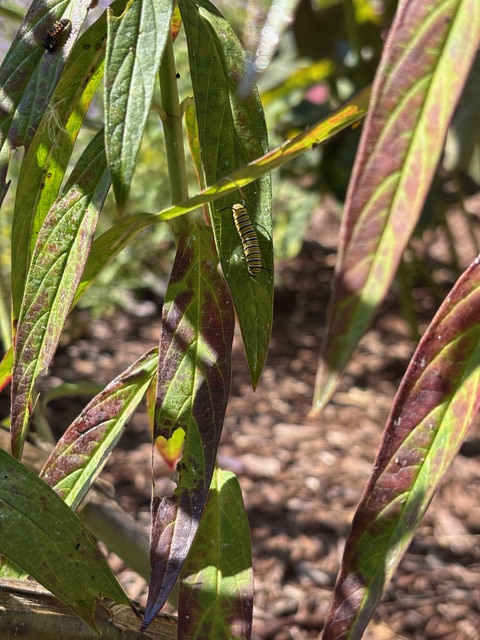
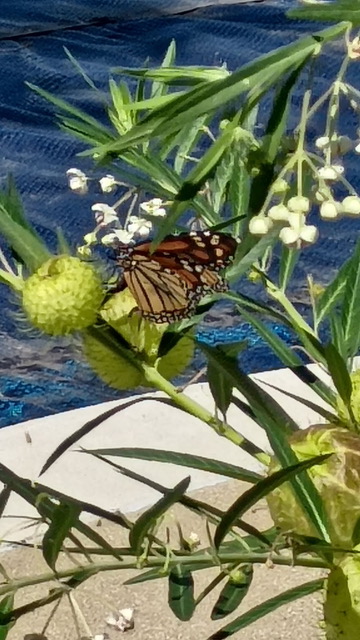
photos by Jeanette Bobos and Ken Krick

 Griffith History Museums