A Tale of the Town – Part Two

Join us as we go back in time to tell the stories of Griffith, from before our town was even thought of and onward.
Written by Karen Kulinski
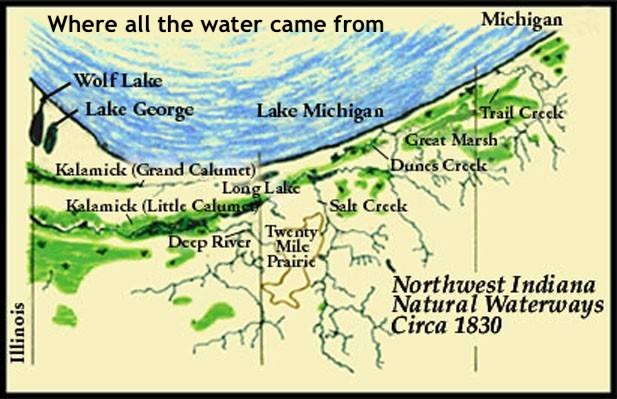
So, in our last Tale, I left you standing up to your waist in the marsh water that one day would be the site of Griffith, Indiana.

By 1850 the Native Americans had been โ€œtreaty-edโ€ out of Indiana, and the U.S. government decided to rid themselves of the uninhabitable marshlands they still owned at the top of our state, but had no use for.

So was passed The Swampland Act of 1850.

Our state โ€” really, all states that bordered the Great Lakes โ€” were given these lands to encourage settlement.  The idea was for Indiana to sell the land cheap to Americans and immigrants alike at $1.25 an acre ($51.92 today.)

There was a bit of a catch, though. The land was mostly underwater, and the buyers would have to drain it before the land could be used to plant crops or build homes on. But there was an incentive, too.

It had been discovered that all that land under all that water for all that time was prime farmland once it was drained, fertile beyond belief. By 1859, the total amount of land sold in Indiana under the Swampland Act was 1,257,588 acres.

The first settlers to come to Griffith, Mathias and Anna Miller, along with Mathiasโ€™ brother, arrived in 1853 and settled on land in the area where the trains eventually crossed on Broad Street.

The Millers lived in a sand dune dugout for their first year in Indiana until Mathias and his brother drained the water off their land and could build a log dwelling.

In 1853, draining land was done by picking up a shovel and digging a ditch to hold back the water or divert it. I once put forth the question: How do you dig a ditch when the land is under water? The answer, you wait to do the digging until late summer, early fall when the water recedes and dries up.

Fun Fact: some 70 years later, a descendent of Mathias and Anna โ€” Leo Miller โ€” caught a mighty fine fish in a Griffith ditch.
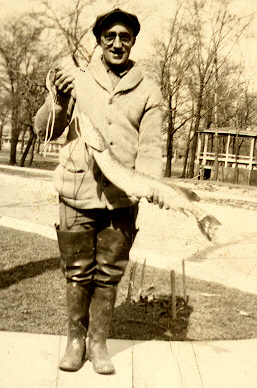
Leo Miller, and his fine fish

In later years, a man by the name of Noah Hart, operated a profitable business digging a massive ditch, with large teams of mules, which opened up more land for farming. Mr. Hart called his creation Cady Ditch after Jack Cady, an innkeeper in the area.

Those early farms grew crops and raised cows and pigs mainly for their own consumption rather than to sell. Among these farm families were many of German descent like Mathias and Anna Miller โ€” the Hoffmans, the Helfens, and the Redars.

But things were destined to change for the farm folks. At the same time that settlement was beginning in Northwest Indiana, the first railroad was built on the east coast, the Baltimore and Ohio.

Some 34 years later, the first railroad line would come through what would become Griffith โ€” the Joliet & Northern Indiana, later acquired by the  Michigan Central. This rail line was heading to the big city of Chicago, Illinois. Chicago was, and is still, the railroad capital of the United States.

Toward the end of the 1800โ€™s, three more railroads came through Griffith, and the Erie Railroad had built a depot in the area that would become Broad Street.

Those four railroads attracted the attention of two entrepreneurs from Rensselaer, Indiana, who dreamed of creating a city to rival Chicago in Northwest Indiana.

But thatโ€™s another story.


Read more ๐Ÿ‘‰
Society Sagas: https://ghsinc.org/category/society-saga/
Tales of the Tower: https://ghsinc.org/category/the-tower/
Tales of the Town: https://ghsinc.org/category/tales-of-the-town/
History Notes: https://ghsinc.org/category/history-notes/
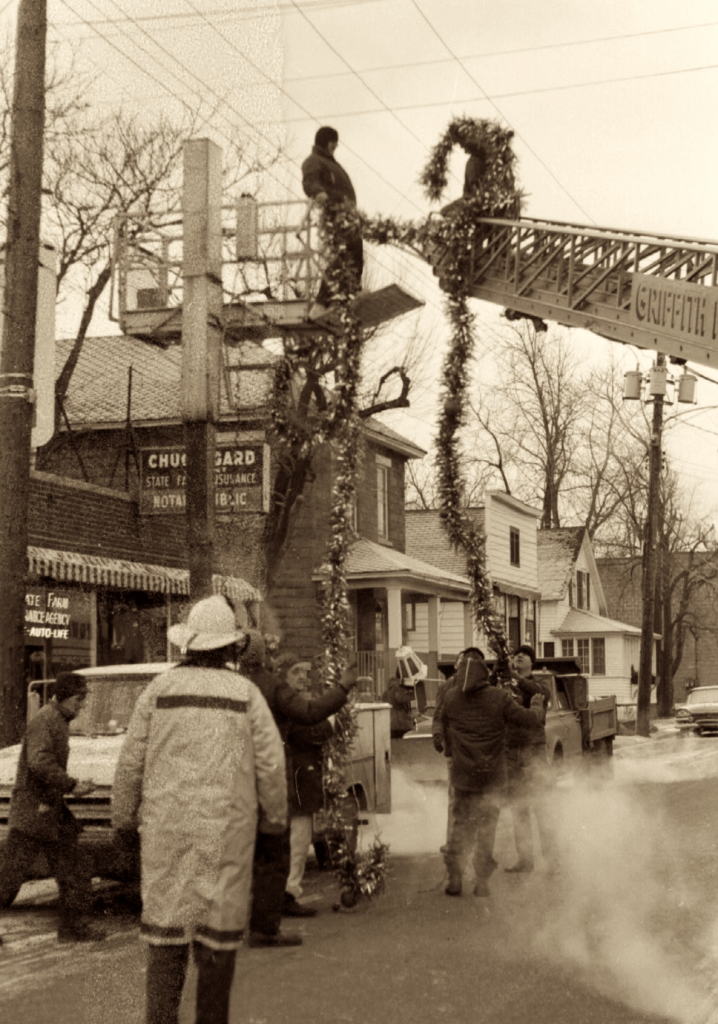
WHEN GRIFFITH TURNED FESTIVE

Take a sleigh ride with me back in time when I first encountered Christmas in Griffith, some 50 years ago.
Written by Karen Kulinski

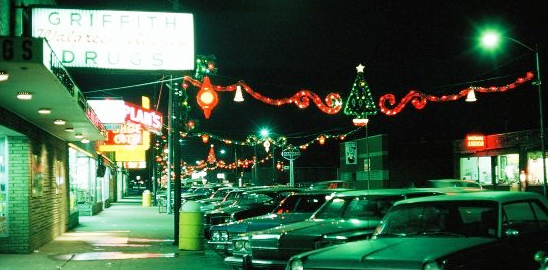
On an early date with my husband, Alan, he took me for a ride down Broad Street, then the major shopping center of the town, to see the Christmas lights. I thought it a sweet gesture, never imaging what a show this little town put on in December.

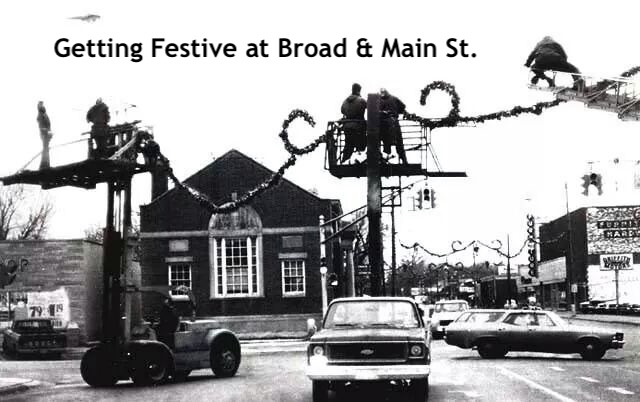
Holiday garlands of greenery, interspersed with oversized Christmas lights and huge ornaments and bows, were strung over Broad Street, one after the other for almost two blocks. Plus special light-up holiday messages โ€” SEASONS GREETINGS, HO HO HO and NOEL.

Below the lights, every shop on those Broad Street blocks were lit up, too. It was a sight right out of the movies โ€” Itโ€™s A Wonderful Life โ€” only way prettier because it was in color.

My first Christmas in Griffith, I discovered who made that holiday magic happen. An organization called Community Spirit. And a whole lot of townspeople.

To find more information, I turned to a 2004 publication โ€” a young peopleโ€™s history of Griffith, written by Griffith young people. My thanks go out to Beiriger 4th-graders, Jill Fitzgerald and Rebecca Frank, whose article on Community Spirit provided a treasure trove of information.

Community Spirit was organized about 1969 by Griffith resident Gale Riggle and the Griffith Junior Chamber of Commerce (Jaycees.) The reason, say the girls in their article, was โ€œthe group felt that downtown Griffith should be more festive at Christmas time.โ€

Festivity takes money, so the group immediately went to work raising funds to purchase a nativity scene. It was put up in front of Franklin School for many years, eventually finding a second home on St. Maryโ€™s Church property.

The Christmas garlands came next, purchased piece meal over the years. Summer and fall, Community Spirit members spent hours making sure all the lights worked and the bows and ornaments were sparkly and tightly attached to the garland.

All had to be ready for Thanksgiving Saturday when Griffith got festive.

The day began with the volunteers enjoying a traditional early breakfast together at a local restaurant. Then they set about hanging the decorations, with the help of the Griffith Fire Department and their cherry-picker truck.

By that evening, with lights all aglow, Griffith was exceedingly merry and bright!

Community Spirit did more than just light up the holiday for Griffith, the girls wrote in their article. โ€œCommunity Spirit also put up flags along Broad Street for the 4th of July and helped with the parade. In the spring, they hung flower baskets downtown.โ€

And, most importantly, the girls wrote one more thing Community Spirit did. โ€œIn the late 1970โ€™s, they worked with other town organizations to save the last remaining depot in Griffith. And over the following two years, helped renovate the depot for use as a town museum.โ€

Unfortunately, the holiday light extravaganza did not continue to today. Rumor has it that as traffic increased on Broad Street, drivers found the lights a distraction, especially nearing stoplights. And taller trucks often hit and damaged the garlands as they barreled through town.  But the memories live on in those who saw those amazing decorations. And now I get to tell a new generations of Griffith folks the story of when Griffith got festive in a very big way!

๐Ž๐ง๐œ๐ž ๐”๐ฉ๐จ๐ง ๐š ๐“๐จ๐ฐ๐ž๐ซ – ๐๐š๐ซ๐ญ ๐Ÿ’

๐™Š๐™ช๐™ง ๐™Ž๐™ค๐™˜๐™ž๐™š๐™ฉ๐™ฎ ๐™Ž๐™–๐™œ๐™– – ๐™Ž๐™–๐™ซ๐™ž๐™ฃ๐™œ ๐™ฉ๐™๐™š ๐™๐™ค๐™ฌ๐™š๐™ง
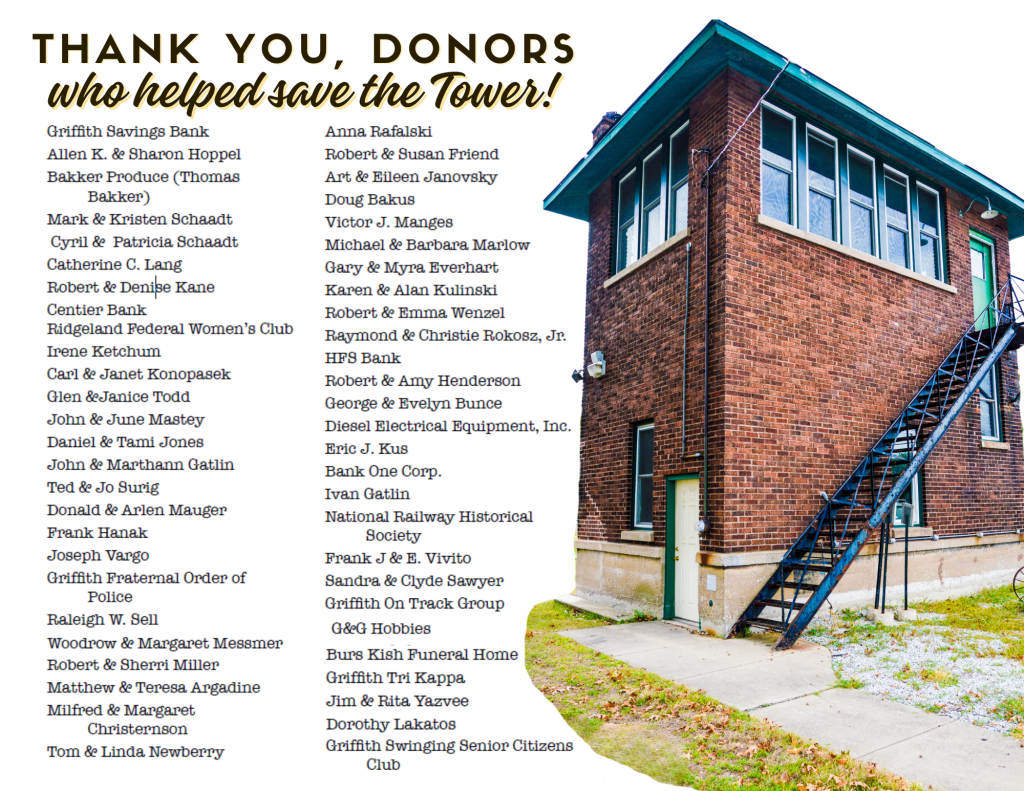
๐“๐ก๐š๐ง๐ค ๐ฒ๐จ๐ฎ ๐ญ๐จ ๐ญ๐ก๐ž ๐๐จ๐ง๐จ๐ซ๐ฌ ๐ฐ๐ก๐จ ๐ก๐ž๐ฅ๐ฉ๐ž๐ ๐ฎ๐ฌ ๐ฌ๐š๐ฏ๐ž ๐ญ๐ก๐ž ๐“๐จ๐ฐ๐ž๐ซ!

It was 25 years ago, and we are still grateful to everyone who donated time and money to help us preserve the Tower and save it from demolition.

Thanks to the businesses and banks that allowed us to put donation jars on their counters, and thanks to all the Griffith residents who put money in the jars! Thanks to all the Historical Society members, who volunteered every step of the way, and of course, thank you to all the people and businesses who donated money towards this gigantic project!

It was really a town-wide effort, and is a monument to the spirit of Griffith!

๐€๐๐ƒ ๐‡๐„๐‘๐„’๐’ ๐“๐‡๐„ ๐‘๐„๐’๐“ ๐Ž๐… ๐“๐‡๐„ ๐’๐“๐Ž๐‘๐˜

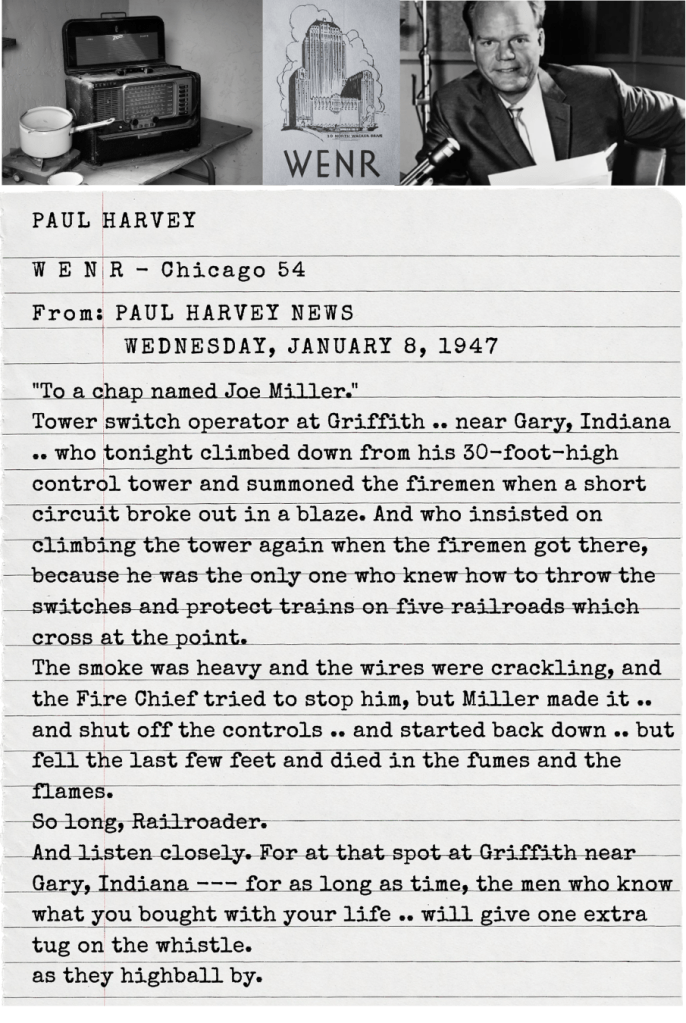
The man who said those words almost every night on the radio was a man named Paul Harvey. When he took notice of Joe Miller, he was the most-listened-to radio broadcaster in America, heard by 25 million people every day.

From his studios in Chicago, Illinois, Harvey would every day diligently sift through news reports available to newspapers and radio broadcasters. He was looking for compelling stories that might have been overlooked by other media outlets.

In early January, 1947, he found such a story, and it happened just 25 miles away in Griffith, Indiana.

Harveyโ€™s programs were carried by 1,200 radio stations, plus an additional 400 stations of American Forces Radio. Famous well into the 1980โ€™s, he had a popular syndicated newspaper column and a TV program.

Hereโ€™s the rest of Joeโ€™s story, Paul Harveyโ€™s tribute to Griffithโ€™s own, Joe Miller, was broadcast on January 8, 1947.

๐“๐ซ๐š๐ ๐ž๐๐ฒ ๐ข๐ง ๐ญ๐ก๐ž ๐“๐จ๐ฐ๐ž๐ซ

๐™…๐™ค๐™š ๐™ˆ๐™ž๐™ก๐™ก๐™š๐™ง’๐™จ ๐™Ž๐™ฉ๐™ค๐™ง๐™ฎ

๐—™๐—ถ๐—ฟ๐—ฒ!

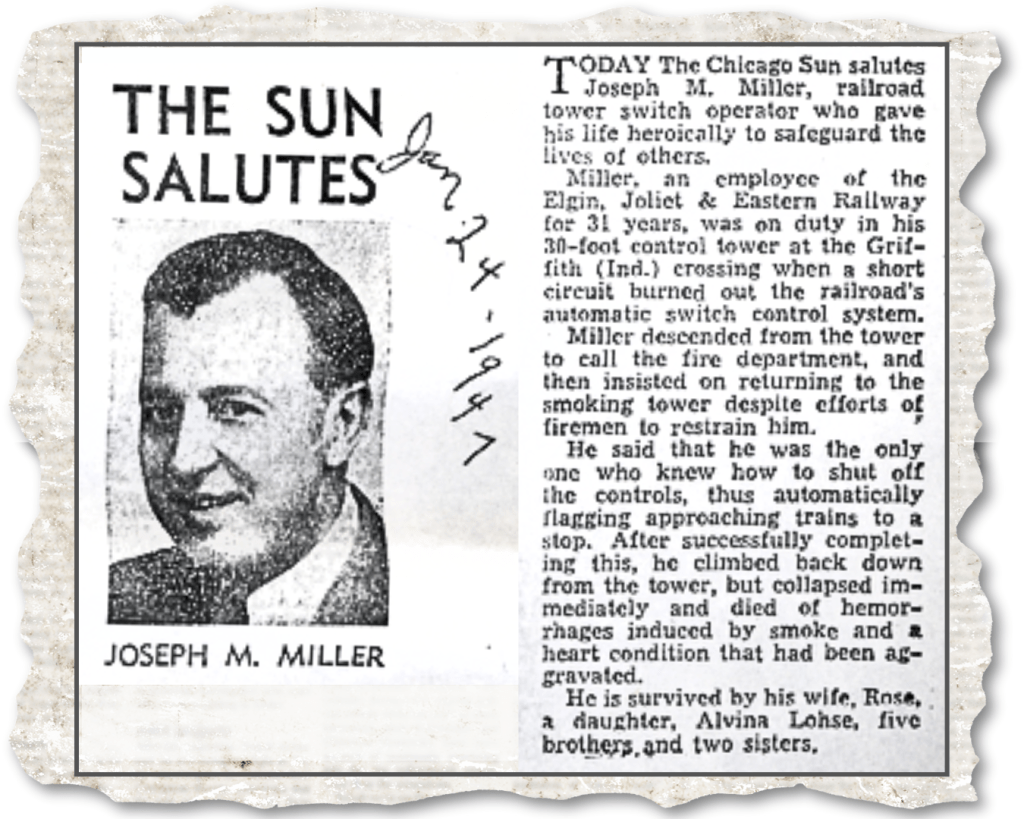
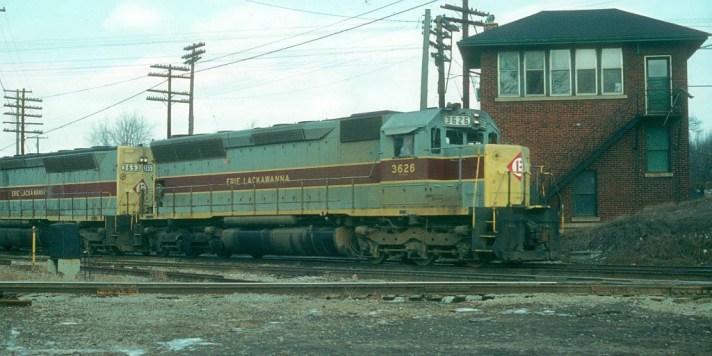
A fear that is universal to all of us, but must have run deeper for men like Joe Miller, who worked in Griffithโ€™s 30-ft-tall Elgin Joliet and Eastern Railway interlocking tower.

You can imagine Joeโ€™s terror that evening in early January, 1947, when smoke began pouring from the towerโ€™s automatic switching controls. With more than 20 years a towerman, he immediately tried to put the fire out himself.

When that failed, and with no other way to alert the nearest depot, he ran down the tower stairs, knowing he was losing time with every step.

When the firemen arrived, all volunteers, Joe returned with them to the tower room despite Fire Chief Robert McFarlandโ€™s efforts to restrain him.

โ€œI have go up there,โ€ he told the Chief. โ€œIโ€™m the only one who knows how to shut off the controls that will flag oncoming trains to stop.โ€
So, Joe Miller went back into the smoky tower room again and did what he had to do. He again went down that long string of stairs and was taken to the local doctorโ€™s office.

He was coughing hard and often, and the doctor called Highland to use their Pullmotoran. But even that, an early type of ventilator to assist with breathing difficulties, didnโ€™t help.

Sadly, the time spent in the tower room inhaling smoke and chemical fumes from burning burning electrical wires had vanquished Joeโ€™s lungs and heart.

In the tradition of railroad men for generations, Joe Miller had done his duty, and gave his life heroically in doing so.
Newspaper articles praised his bravery and dedication to saving lives.

One newspaper ran an editorial suggesting Joe be nominated for a Carnegie Hero Award. Named after philanthropist Andrew Carnegie, it is presented โ€œto individuals in the United States and Canada who risk death or serious physical injury to an extraordinary degree saving or attempting to save the lives of others.โ€

Joe Miller did not receive that award, but he did receive notice from a man that some might say was equal in fame to Mr. Carnegie.

The upper room of the Griffith Centennial Tower Museum is dedicated to Mr. Miller’s memory as the Joseph Miller Tower Room.

Come back to find out the rest of the story.

๐Ž๐ง๐œ๐ž ๐”๐ฉ๐จ๐ง ๐š ๐“๐จ๐ฐ๐ž๐ซ – ๐๐š๐ซ๐ญ ๐Ÿ‘

๐™Š๐™ช๐™ง ๐™Ž๐™ค๐™˜๐™ž๐™š๐™ฉ๐™ฎ ๐™Ž๐™–๐™œ๐™– – ๐™Ž๐™–๐™ซ๐™ž๐™ฃ๐™œ ๐™ฉ๐™๐™š ๐™๐™ค๐™ฌ๐™š๐™ง
๐‡๐ž๐ฅ๐ฉ ๐…๐ซ๐จ๐ฆ ๐’๐จ๐ฆ๐ž ๐’๐ฉ๐ž๐œ๐ข๐š๐ฅ ๐…๐ซ๐ข๐ž๐ง๐๐ฌ
๐˜ฃ๐˜บ ๐˜’๐˜ข๐˜ณ๐˜ฆ๐˜ฏ ๐˜’๐˜ถ๐˜ญ๐˜ช๐˜ฏ๐˜ด๐˜ฌ๐˜ช

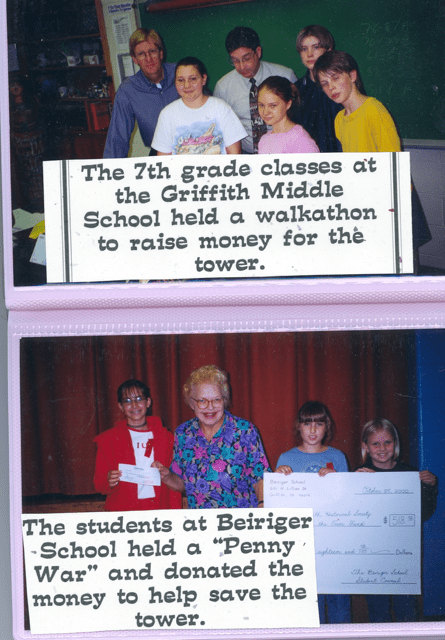
You know youโ€™re reeeeeally in need of cash when you take money from school kids. But thatโ€™s what we did 25 years ago, and we did it twice.

To be honest, we were honored to do it. Because, in both of the cases, the students wanted to give us money for the tower and they worked to do it.

Seventh-graders, in the then Griffith Junior/Senior High School, held a walkathon from the school to our Historical Park and back, earning us more than $500. And the Beiriger Elementary School students held a Penny War for us.

Come to find out every year back then, the Beiriger Student Council voted on one project to support. In the year 2000, they chose our Griffith Tower.

โ€œWe felt saving the tower was important to the town,โ€ said Student Council president Ashley Korak, when interviewed for a newspaper article. โ€œWith so few towers left, we want to preserve ours.โ€

Note: When Ashley said those words, there were 177 towers still in operation in North America. Twenty-five years later, there are fewer than 50.

The Penny War worked like this: Each grade was given a big jar into which students deposited pennies into their particular jars every day for a week. All the jars were kept in the school foyer, and at the end of the week, a total $518.72 from all the jars was given to the tower.

The 5th graders donated the most pennies, with the 6th grade coming in 2nd place, and the 3rd graders taking 3rd.

Griffith Historical Society President Delores Smessaert, in the photo here, thanks all the students. โ€œSo much work needs to be done in this 76-year-old building,โ€ she went on, โ€œand your donation will go a long way in helping us install a new heating system.โ€

WHAT IS AN INTERLOCKING TOWER, ANYWAY?

There is a truth beyond doubting that railroad companies really donโ€™t like when two trains collide. Especially in bygone times when they were just getting started and money was tight.

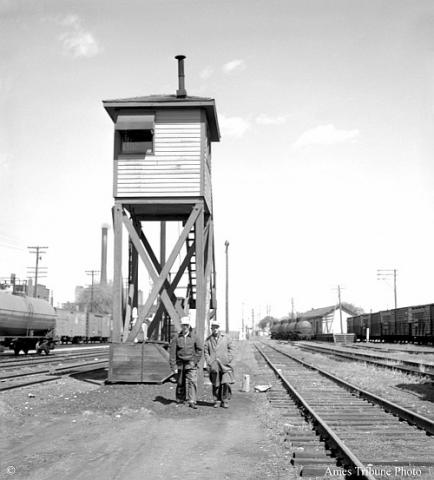
So, wherever two sets of rail lines crossed each other, known as an interlocking, a small cabin on stilts was built to control train movement. It was up high to provide a clear view of the tracks. Anย employee would manually activate the grade crossing signals and gates before automatic detection was available or installed.ย  (Check out the photos below!)

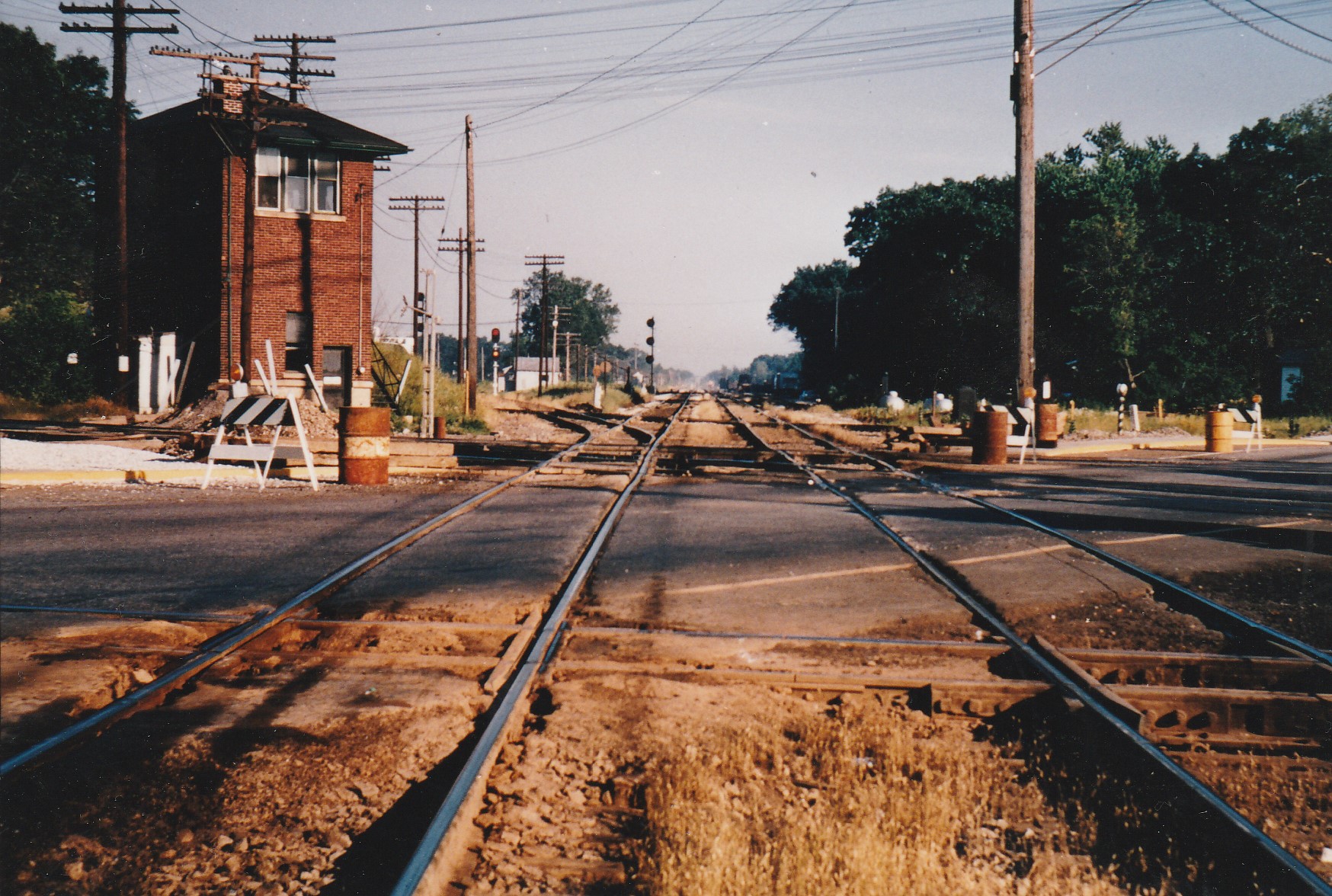
Griffithโ€™s junction had five sets of rail lines interlocking at one place, hence the need for a larger brick building.

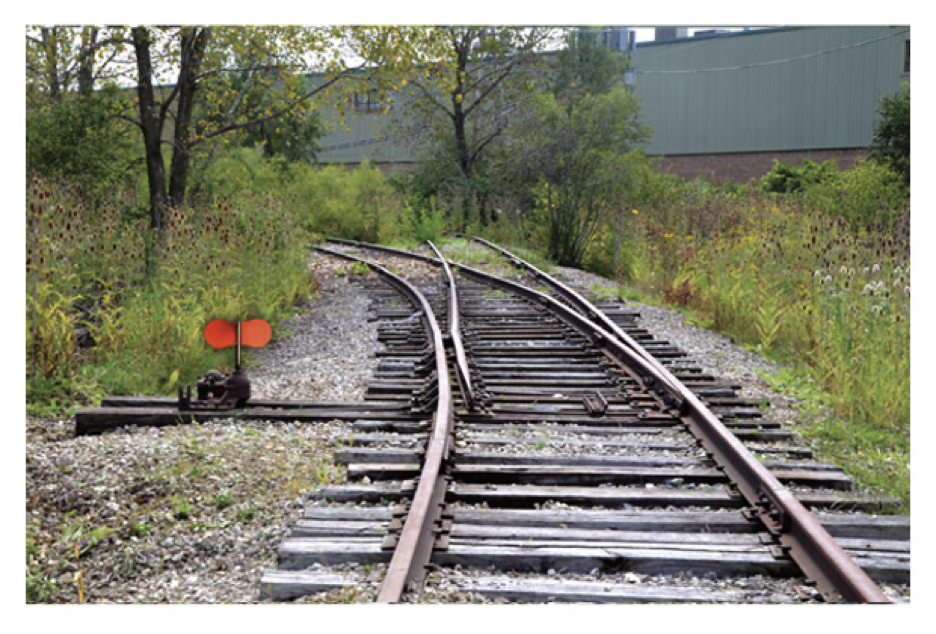
An interlocking tower was outfitted with machinery that linked the tower to sets of moveable tracks, called โ€œswitch tracks,โ€ and a man that operated it. Through the use of levers linked to these tracks, the Operator, often called the Towerman, could control their position.

By carefully coordinating these switch tracks, the Operator was able to ensure an oncoming train was safely guided onto the right track to avoid a collision.

At one time, there were 5,000 railroad towers, in North America. Today, there are fewer than 50 towers still operating. Most of the rest have been torn down due to advancements in technology.

Our tower also faced demolition 25 years ago, but then Elgin Joliet & Eastern Railway general manager, Mel Turner, asked if we wanted the building. Of course, we said, โ€œYES!โ€

We’ll continue to unfold more of this story here on our site, culminating in a Celebrate Our Tower Day, at the Griffith Historical Park, August 10th. ย 

So, be sure to stay tuned, to use a well-known phrase of days gone by.

(And click the DONATE button now to help support upkeep of the Tower and rail-cam!!)

Left: Ames, IA Gate Tower, April 4, 1958ย , which looks similar to a manually operated switch tower ; Web source: https://ameshistory.org/tribunearchives/railroad-crossing-watchmen
Right Top: Switch rails; Right bottom:
Griffith’s Interlocking Tower,
July 6, 1974, Photo taken by John Strombeck
Web source: https://industrialscenery.blogspot.com/2017/09/griffith-in-ej-and-cngtw-junction-tower.html

๐Ž๐ง๐œ๐ž ๐”๐ฉ๐จ๐ง ๐š ๐“๐จ๐ฐ๐ž๐ซ – ๐๐š๐ซ๐ญ ๐Ÿ

๐™Š๐™ช๐™ง ๐™Ž๐™ค๐™˜๐™ž๐™š๐™ฉ๐™ฎ ๐™Ž๐™–๐™œ๐™– – ๐™Ž๐™–๐™ซ๐™ž๐™ฃ๐™œ ๐™ฉ๐™๐™š ๐™๐™ค๐™ฌ๐™š๐™ง
๐˜ฃ๐˜บ ๐˜’๐˜ข๐˜ณ๐˜ฆ๐˜ฏ ๐˜’๐˜ถ๐˜ญ๐˜ช๐˜ฏ๐˜ด๐˜ฌ๐˜ช

The tale of the Tower, and indeed a great deal of Griffith Historical Societyโ€™s history, reads like a storybook, hence the title.

Do you know what ๐™จ๐™š๐™ง๐™š๐™ฃ๐™™๐™ž๐™ฅ๐™ž๐™ฉ๐™ฎ is? Beyond an amazing Griffith ice cream parlor? I use the world a lot when talking about how we developed and grew.

Serendipity in the dictionary is described as: ๐—ฎ ๐—ฐ๐—ต๐—ฎ๐—ป๐—ฐ๐—ฒ ๐—ผ๐—ฐ๐—ฐ๐˜‚๐—ฟ๐—ฟ๐—ฒ๐—ป๐—ฐ๐—ฒ ๐˜๐—ต๐—ฎ๐˜ ๐—ฑ๐—ฒ๐˜ƒ๐—ฒ๐—น๐—ผ๐—ฝ๐˜€ ๐—ถ๐—ป ๐—ฎ ๐—ต๐—ฎ๐—ฝ๐—ฝ๐˜† ๐—ผ๐—ฟ ๐—ฏ๐—ฒ๐—ป๐—ฒ๐—ณ๐—ถ๐—ฐ๐—ถ๐—ฎ๐—น ๐˜„๐—ฎ๐˜†.

Serendipity in real life:

  • The chance meeting of four people who went on to spearhead the saving of the last Griffithโ€™s depot from demolition. (See our first โ€œSociety Sagaโ€ in our spring newsletter or on our website for that story.)
  • The time the land we hoped to expand on, that was $20,000 when we first asked to purchase it, dropping to $8,000 when we absolutely, positively, 100% had to purchase it.
  • And we must mention how I was serendipitously connected to the General Superintendent of the Elgin Joliet & Eastern railroad when I called asking for key chains and paper engineer hat to give away to kids.

That man, Mel Turner, ended up giving us the Tower some five years later.

You know how you immediately click with someone? That was me and Mr T (though I never called him that to his face).

We talked for nearly an hour: about our getting the land and our future plans for it; about his railroadโ€™s plans for tearing down our Tower, and could we have the equipment in the upper room, which was a yes.

From time to time, I would write him, filling him in on everything we were doing, and asking about the Tower. I found those old letters recently, and it was as though I was writing to a friend. I can only help wondering what he thought of my rambles.
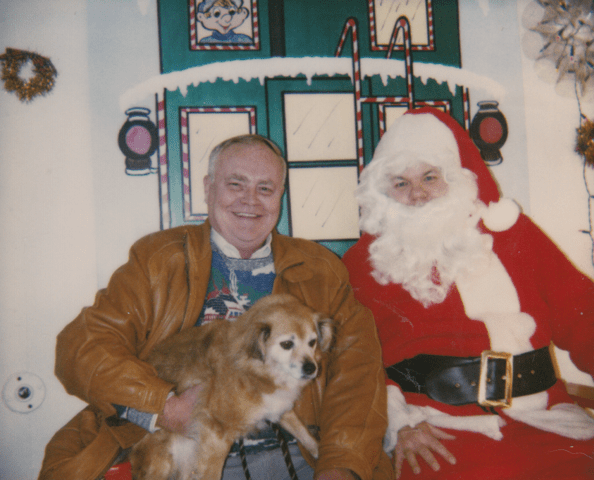
In mid-December, 1999, Mr. Turner came out to the Park during our Santa event, with his beloved dog, Buddy. Our Tower, he told us, was being closed down at the end of the year. And, he said, he was giving us the Tower!

The whole building!! And $30,000, to help with the move!!!

And we had until July 30th to get the Tower off their land.

Tale to be continuedโ€ฆ

Mr. Turner and Santa in the Caboose

Mr. Turner and Santa in the Caboose

A Tale of the Town

Join us as we go back in time to tell the stories of Griffith, from before our town was even though of and onward. Weโ€™ll begin in the early 1800โ€™s, when the area we live now was completely waterlogged and the beaver was the most prominent citizen around.

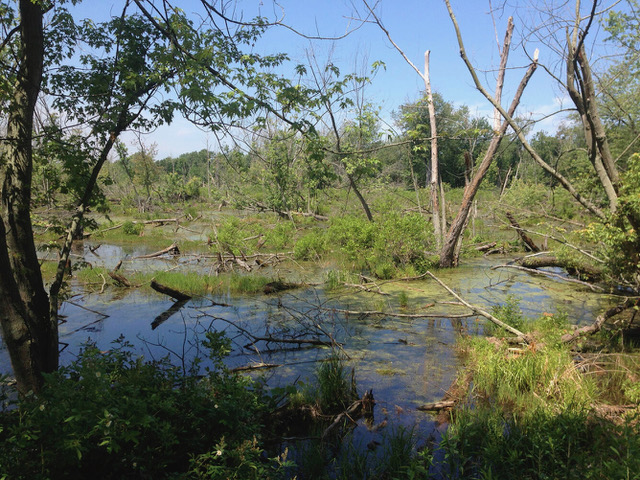
Our town is located on low ground, between two high strips of land โ€” now called Ridge Road and Route 30. For the longest time, these lowlands in the middle were mostly a huge wetlands, fed by the Grand Calumet and Little Calumet river systems.

It was known as Cady Marsh, after a man named Jack Cady who ran an inn along the high ground that would become Ridge Road.

The area was also considered uninhabitable, and was not part of Indiana when it became a state in 1816. Yet, all that water was good for growing all kinds of plants and trees. So, it wasnโ€™t surprising that a lot of beavers made their home there, too.

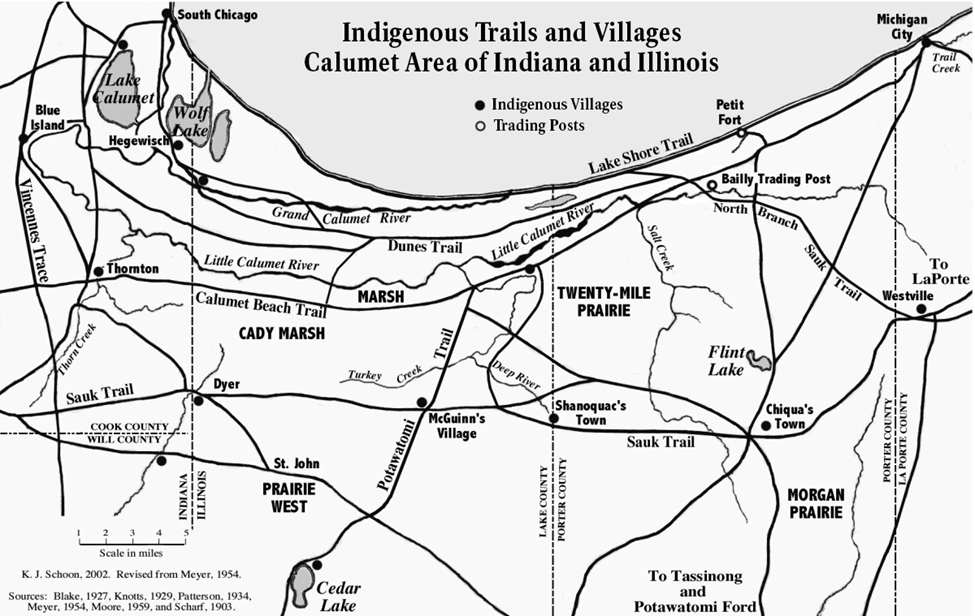
One group of people knew that the marshland was habitable when the water dried up in the summer heat โ€” Native Americans from the Potawatomi nation who lived in small villages southeast of here.

In that dryness of late summer and early fall, they camped here as their people had done for generations. Gathering edible plants, and grasses to weave baskets used for storage and to hold foods.

Hunting beaver was a prime activity during those waning days of summer. Potawatomi tribesmen then took those beaver furs to sell at Baillyโ€™s Trading Post, some 20 miles away. They got in return, European-made goods like guns, metal tools, cloth and beads.

Speaking of Europe, thatโ€™s where these Indiana beaver furs were sent, to make top hats for rich European gentlemen.
Bet you didnโ€™t know our area was once part of the massive North American Fur Trade!

By the mid-1800โ€™s, most of Indianaโ€™s Native American tribes had been moved out of โ€” the Land of the Indians โ€” by use of treaties. The Potawatomi Tribe was the last to go.

Time was coming to an end for the Cady Marsh, too. But that is another story.

25th Anniversary of the Tower

๐—๐˜‚๐—น๐˜† ๐˜๐—ต๐—ถ๐˜€ ๐˜†๐—ฒ๐—ฎ๐—ฟ ๐—บ๐—ฎ๐—ฟ๐—ธ๐˜€ ๐Ÿฎ๐Ÿฑ ๐˜†๐—ฒ๐—ฎ๐—ฟ๐˜€ ๐˜€๐—ถ๐—ป๐—ฐ๐—ฒ ๐˜„๐—ฒ ๐˜€๐—ฎ๐˜ƒ๐—ฒ๐—ฑ ๐˜๐—ต๐—ฒ ๐—˜๐—&๐—˜ ๐—œ๐—ป๐˜๐—ฒ๐—ฟ๐—น๐—ผ๐—ฐ๐—ธ๐—ถ๐—ป๐—ด ๐—ง๐—ผ๐˜„๐—ฒ๐—ฟ ๐—ณ๐—ฟ๐—ผ๐—บ ๐—ฑ๐—ฒ๐—บ๐—ผ๐—น๐—ถ๐˜๐—ถ๐—ผ๐—ป ๐—ฎ๐—ป๐—ฑ ๐—บ๐—ผ๐˜ƒ๐—ฒ๐—ฑ ๐—ถ๐˜ ๐˜๐—ผ ๐—ถ๐˜๐˜€ ๐—ฐ๐˜‚๐—ฟ๐—ฟ๐—ฒ๐—ป๐˜ ๐—น๐—ผ๐—ฐ๐—ฎ๐˜๐—ถ๐—ผ๐—ป.

The building is now on the National Register of Historic Places and the Indiana Register of Historic Sites and Structures.

We made this video in 2003 as an entry for a prize from the show “The View” but it’s a great summary of what we’re about and why we do what we do!

More about the Tower: https://ghsinc.org/the-tower/