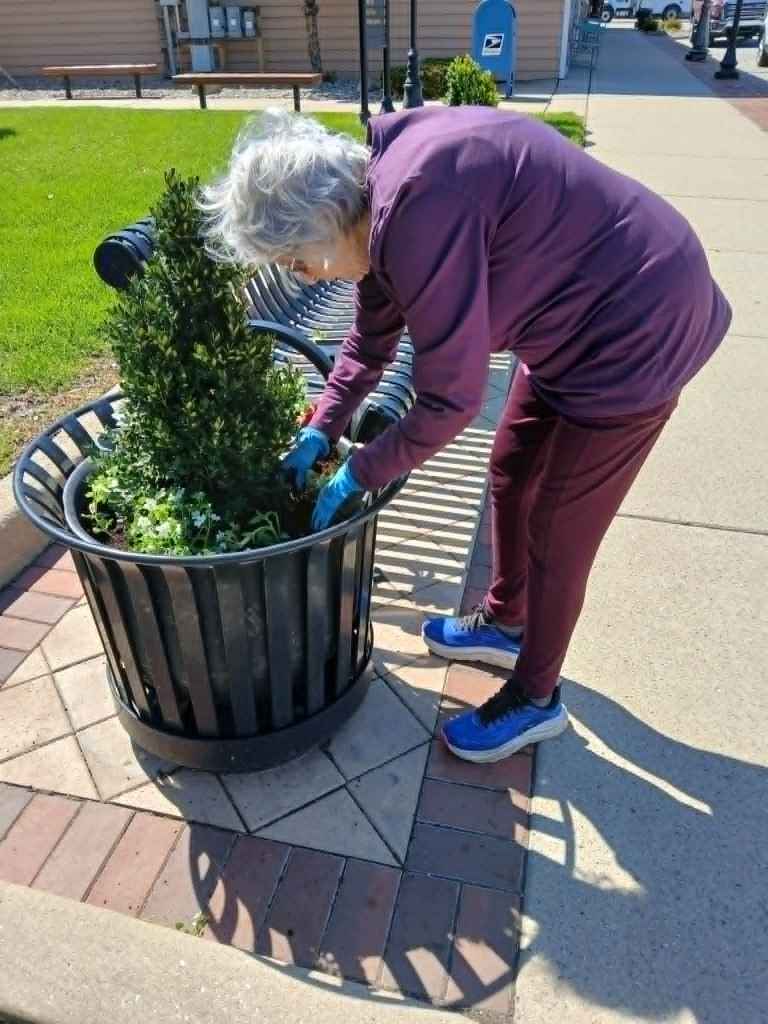
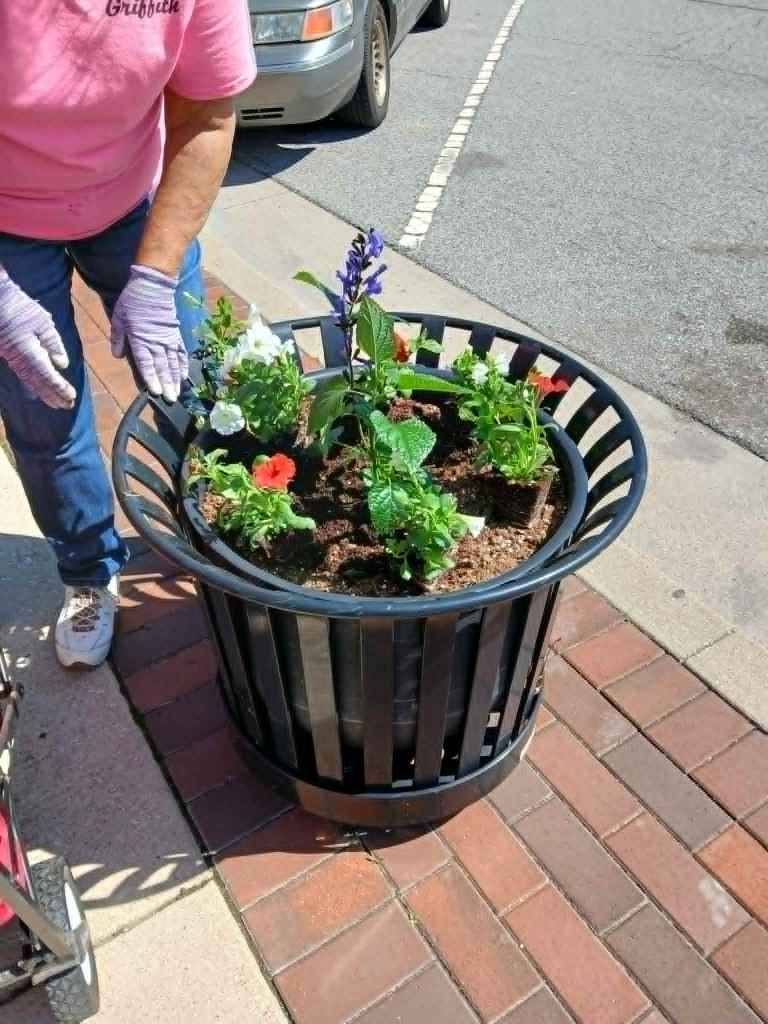
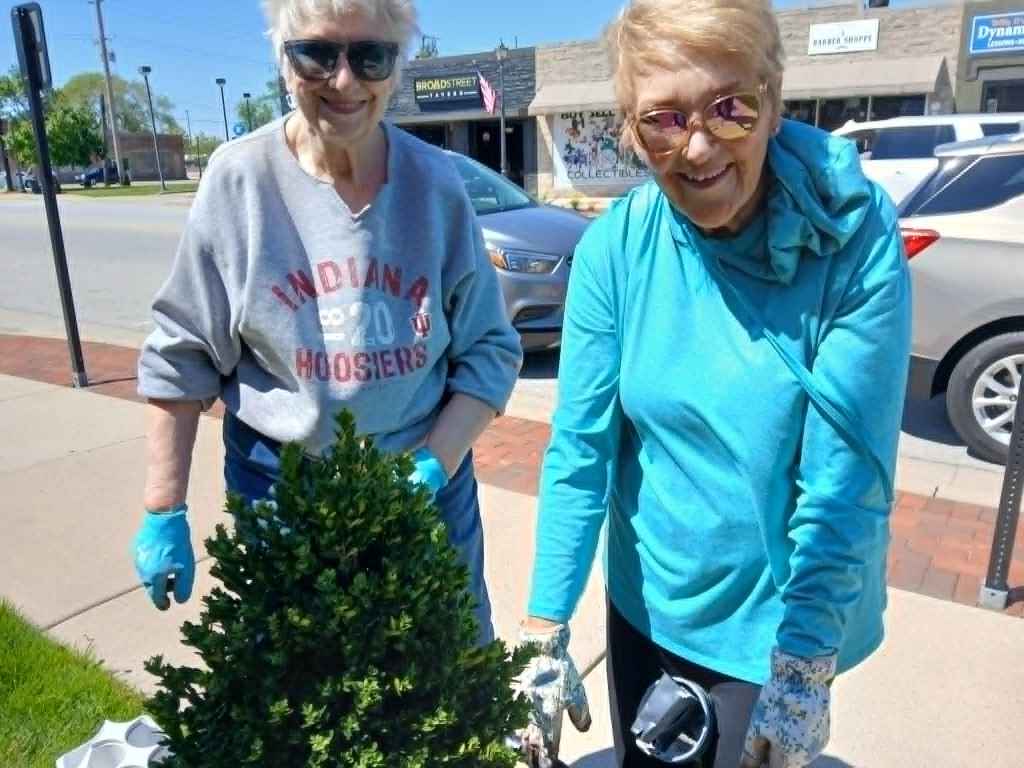
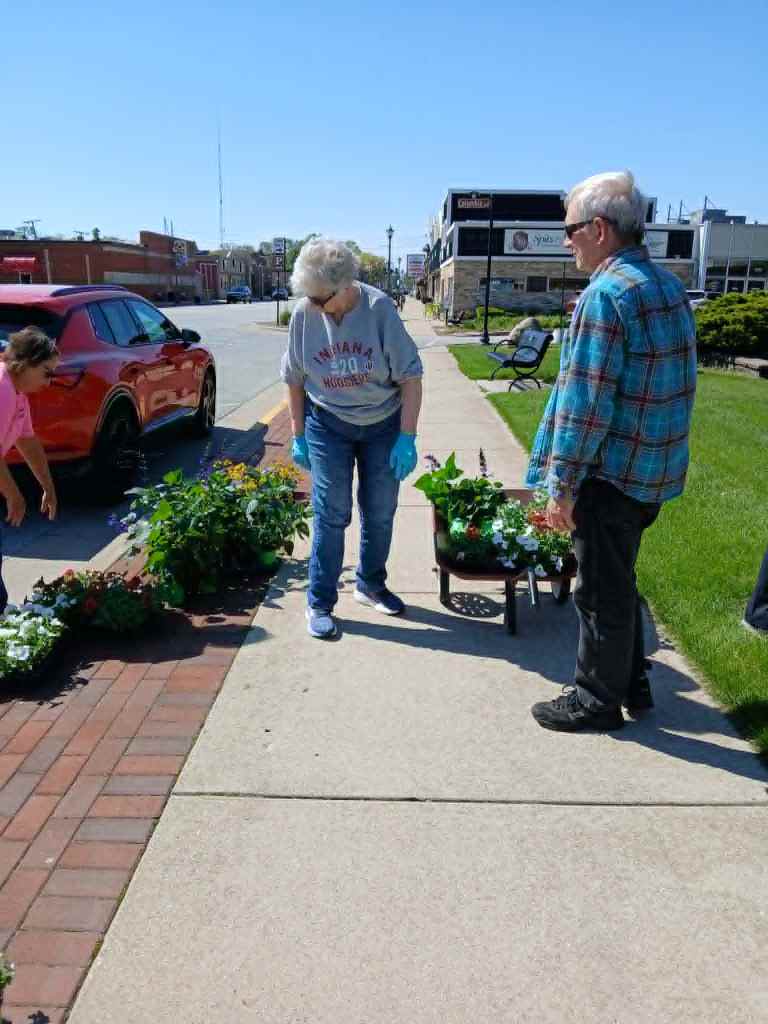
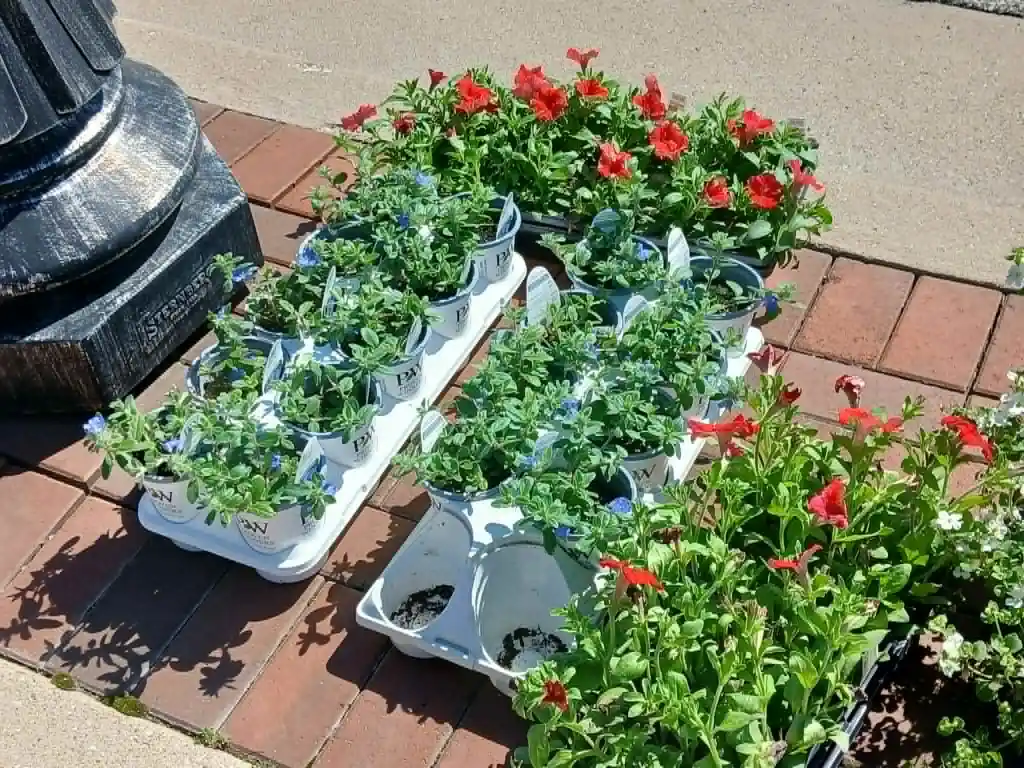
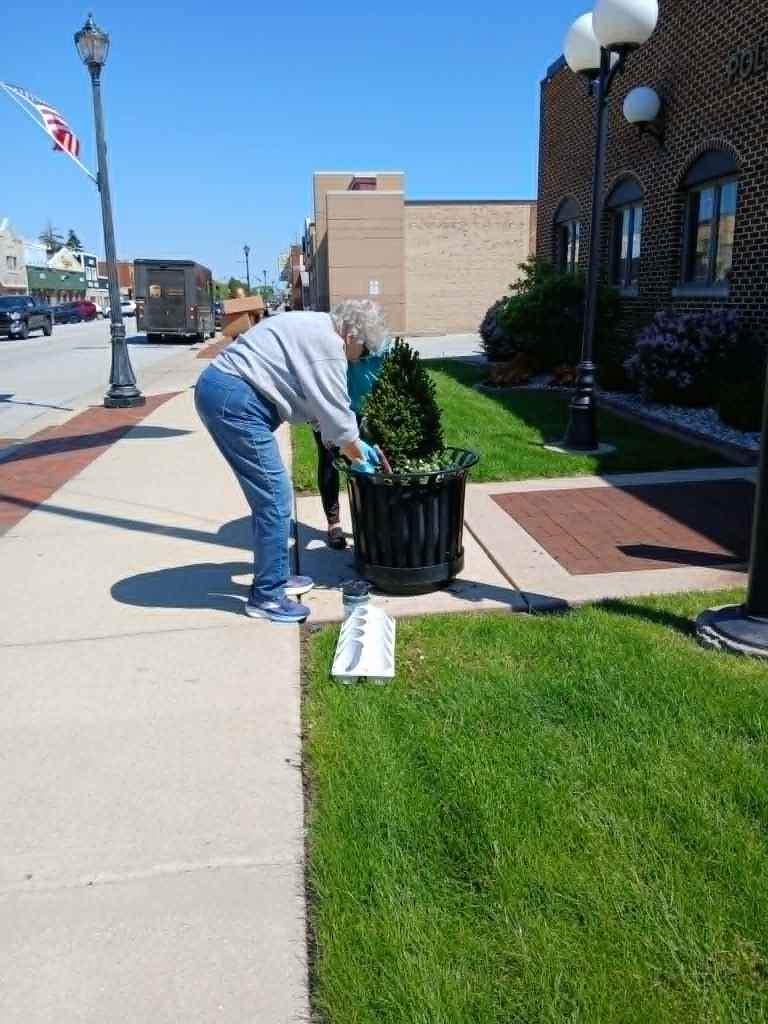
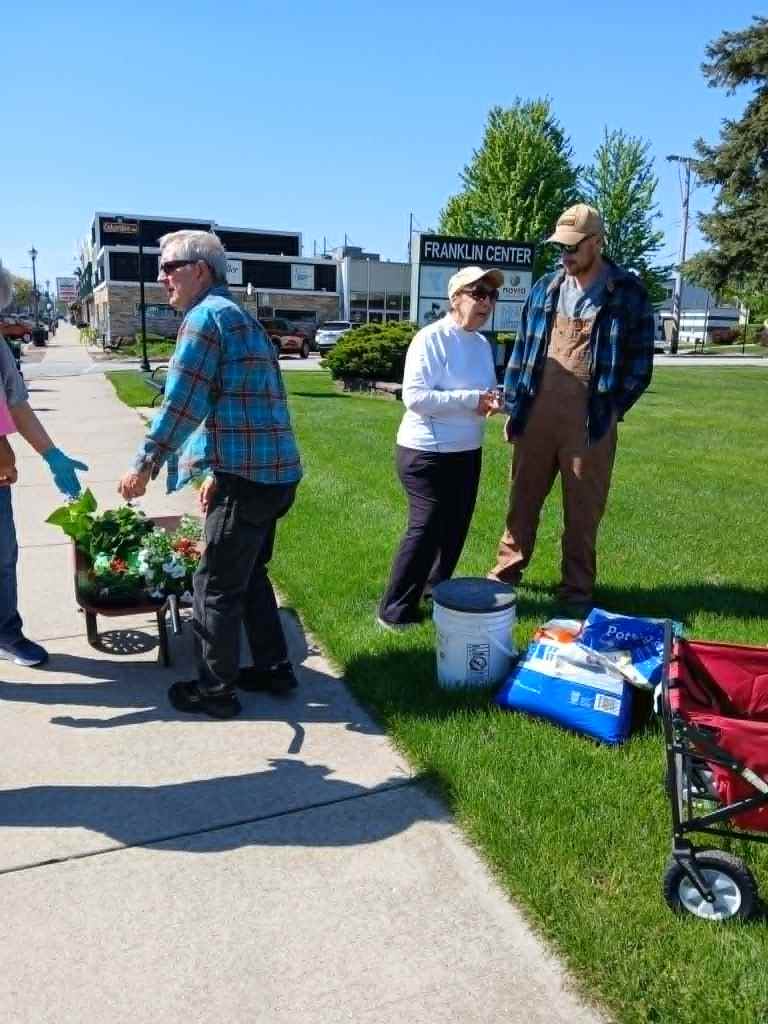
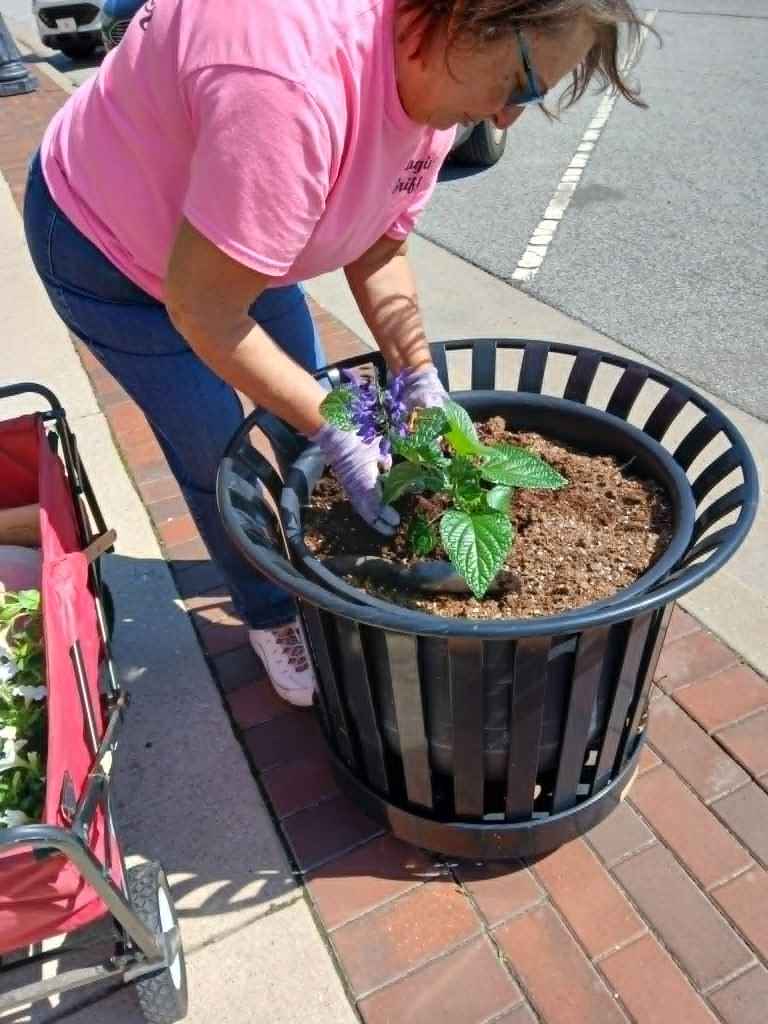
🇺🇸 𝐖𝐞’𝐫𝐞 𝐡𝐨𝐧𝐨𝐫𝐢𝐧𝐠 𝐭𝐡𝐞 𝐔𝐧𝐢𝐭𝐞𝐝 𝐒𝐭𝐚𝐭𝐞𝐬 𝐒𝐞𝐦𝐢𝐪𝐮𝐢𝐧𝐜𝐞𝐧𝐭𝐞𝐧𝐧𝐢𝐚𝐥 𝐭𝐡𝐢𝐬 𝐲𝐞𝐚𝐫! ……❈★❈★……(𝘏𝘢𝘷𝘦 𝘺𝘰𝘶 𝘣𝘦𝘦𝘯 𝘸𝘰𝘳𝘬𝘪𝘯𝘨 𝘰𝘯 𝘮𝘦𝘮𝘰𝘳𝘪𝘻𝘪𝘯𝘨 𝘵𝘩𝘢𝘵 𝘸𝘰𝘳𝘥?) ❤️🤍💙Griffith Historical Society’s America 250 Committee worked with Imagine Griffith and citizen volunteers to plant red, white and blue flowers throughout downtown Griffith. The flowers were provided courtesy of the Parks Department. 🇺🇸We hope you enjoy them this summer as we continue to celebrate America’s 250th birthday!
Nancy is the current President of the Griffith Historical Society.
Tell us a bit about yourself! I’ve been married to Mike Stout for 47 years. I’ve got 3 children: Mike Jr, Angela, and Adam, and 9 grandchildren! I worked at the License Bureau, Griffith Senior High School’s Attendance Secretary, Strack & Van Til, and at American Trans Air (ATA) airports in FL and Midway. I have served on the Police Commission, as a UFCU Board Member, on the Griffith Educational Foundation, and as a Precinct Committeeperson.
What is your favorite memory about living in Griffith? My favorite memory of Griffith is ice skating at Central Park, summer recreation St Mary’s for grade school, and going to Griffith High School (I had a blast!)
What drew you to the GHS? I have always loved Griffith, so when I saw they had a Historical Society, I knew it was for me.
What do you like most about being a GHS member and officer? Finding out the history of Griffith. Barrel train at the Market with all the children. Elmer J Project with the 3rd graders. They get so excited when they’re learning about the history of Griffith. Santa in the Caboose – the children are so excited to see Santa. I love working with the people of the Historical Society. Everyone supports each other.
Where DOES one put a depot?Written by Karen Kulinski
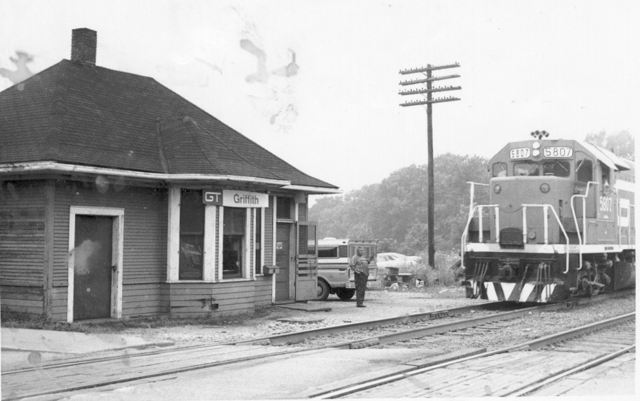
When last we were together, it was the late 1970’s. A small band of Griffith townsfolk had decided to save the Grand Trunk Depot from demolition, the last of three train stations that once stood near the Broad Street railroad crossing.
One of the first things they did was ask other town organizations to join them. Two major ones, Griffith Community Spirit and the Griffith Junior Woman’s Club, heeded the call.
They also approached the Town Board for help, and Trustee Merle Colby became the man on point.
Of major concern to the group was raising the funds to move the Depot, and the group approached local business for contributions or for in-kind items or services.
But equally concerning was, if the group was able to save the Depot, where would they put it?
Martha Gatlin recalled, “We felt it was important to keep the Depot visible to drivers who were stopped for one of the many trains that came through Griffith on the then-eleven tracks. And to keep the building close to the town’s operational rail lines.”
Many years later, this decision ended up being a major factor in the Society’s favor when we applied for the Depot to be put on the National Register Of Historic Places and the Indiana Register of Historic Sites and Structures.
But finding such a site back then wasn’t easy for the group. Finally, Howard Anderson discovered a small patch of vacant land on the corner of Avenue A and Broad Street.
Further investigation at the courthouse revealed no one had a claim on the land, nor did anyone have a deed to it.
“We immediately claimed it!” Martha stated, “And the stage was set to move the Depot onto it.”
Some years later, it was discovered that the property was once part of a street named Travis Avenue. For some unknown reason, the street ended up going in a different direction, leaving the open space behind. The street also ended up with a different name — Avenue A.
Whatever the reason for this happening, it sure was a bit of serendipity working for us early on.
In January, 1980, the last remaining Griffith depot was safely moved to that empty spot of land right next to the railroad tracks.
The original use for the Depot was as a storage place for Community Spirit’s Christmas decorations. Before long, a more noble use for the Depot would be decided on.
And so would begin a new history for that heretofore unwanted Depot and the abandoned patch of land.
Also part of the group dedicated to saving the Depot but not mentioned in this article were Kathy Anderson, Donna Gonzalez and Ray Anderson (no relation to Kathy.)
Join us as we go back in time to tell the stories of Griffith, from before our town was even thought of and onward. Written by Karen Kulinski
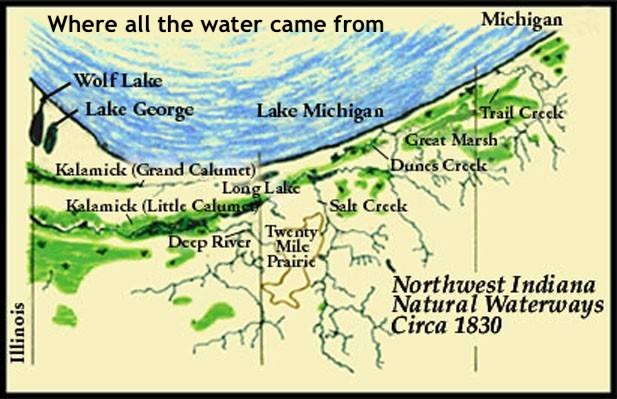
So, in our last Tale, I left you standing up to your waist in the marsh water that one day would be the site of Griffith, Indiana.
By 1850 the Native Americans had been “treaty-ed” out of Indiana, and the U.S. government decided to rid themselves of the uninhabitable marshlands they still owned at the top of our state, but had no use for.
So was passed The Swampland Act of 1850.
Our state — really, all states that bordered the Great Lakes — were given these lands to encourage settlement. The idea was for Indiana to sell the land cheap to Americans and immigrants alike at $1.25 an acre ($51.92 today.)
There was a bit of a catch, though. The land was mostly underwater, and the buyers would have to drain it before the land could be used to plant crops or build homes on. But there was an incentive, too.
It had been discovered that all that land under all that water for all that time was prime farmland once it was drained, fertile beyond belief. By 1859, the total amount of land sold in Indiana under the Swampland Act was 1,257,588 acres.
The first settlers to come to Griffith, Mathias and Anna Miller, along with Mathias’ brother, arrived in 1853 and settled on land in the area where the trains eventually crossed on Broad Street.
The Millers lived in a sand dune dugout for their first year in Indiana until Mathias and his brother drained the water off their land and could build a log dwelling.
In 1853, draining land was done by picking up a shovel and digging a ditch to hold back the water or divert it. I once put forth the question: How do you dig a ditch when the land is under water? The answer, you wait to do the digging until late summer, early fall when the water recedes and dries up.
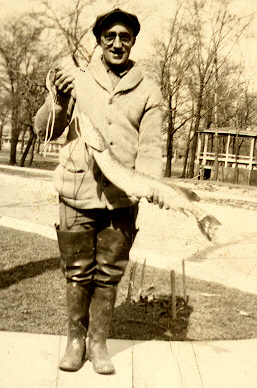
Fun Fact: some 70 years later, a descendent of Mathias and Anna — Leo Miller — caught a mighty fine fish in a Griffith ditch.
In later years, a man by the name of Noah Hart, operated a profitable business digging a massive ditch, with large teams of mules, which opened up more land for farming. Mr. Hart called his creation Cady Ditch after Jack Cady, an innkeeper in the area.
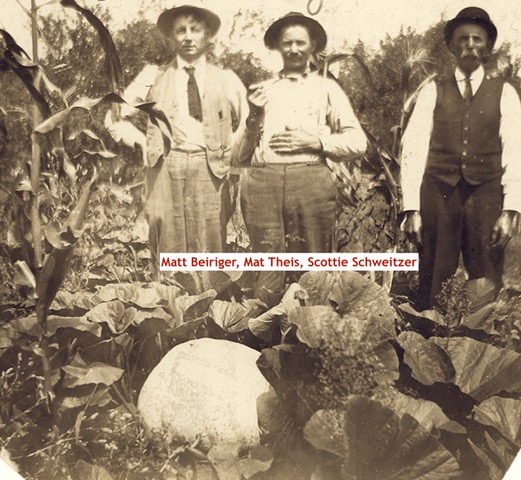
Those early farms grew crops and raised cows and pigs mainly for their own consumption rather than to sell. Among these farm families were many of German descent like Mathias and Anna Miller — the Hoffmans, the Helfens, and the Redars.
But things were destined to change for the farm folks. At the same time that settlement was beginning in Northwest Indiana, the first railroad was built on the east coast, the Baltimore and Ohio.
Some 34 years later, the first railroad line would come through what would become Griffith — the Joliet & Northern Indiana, later acquired by the Michigan Central. This rail line was heading to the big city of Chicago, Illinois. Chicago was, and is still, the railroad capital of the United States.
Toward the end of the 1800’s, three more railroads came through Griffith, and the Erie Railroad had built a depot in the area that would become Broad Street.
Those four railroads attracted the attention of two entrepreneurs from Rensselaer, Indiana, who dreamed of creating a city to rival Chicago in Northwest Indiana.