
Join us as we go back in time to tell the stories of Griffith, from before our town was even though of and onward. We’ll begin in the early 1800’s, when the area we live now was completely waterlogged and the beaver was the most prominent citizen around.
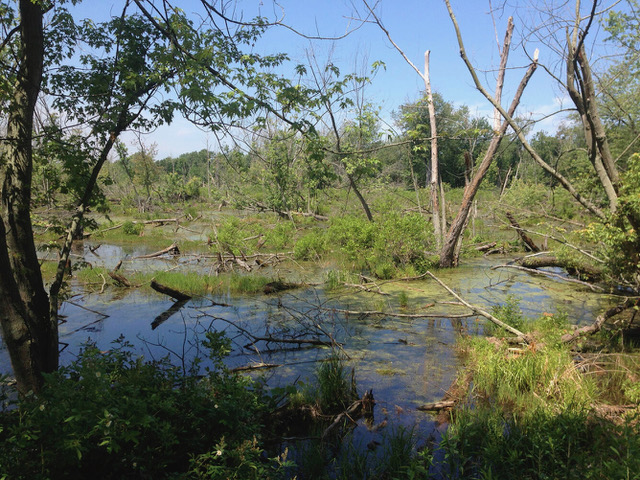
Our town is located on low ground, between two high strips of land — now called Ridge Road and Route 30. For the longest time, these lowlands in the middle were mostly a huge wetlands, fed by the Grand Calumet and Little Calumet river systems.
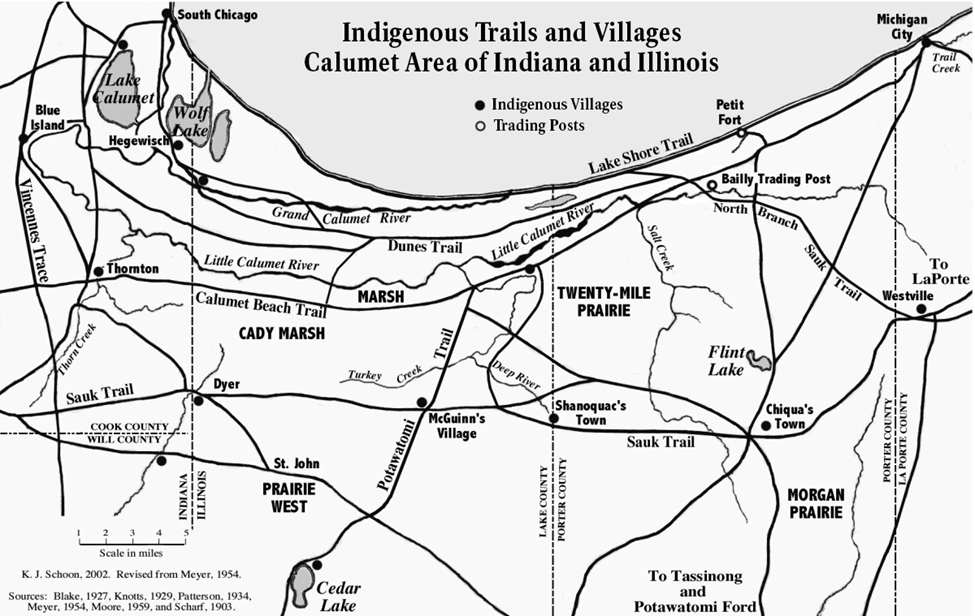
It was known as Cady Marsh, after a man named Jack Cady who ran an inn along the high ground that would become Ridge Road.
The area was also considered uninhabitable, and was not part of Indiana when it became a state in 1816. Yet, all that water was good for growing all kinds of plants and trees. So, it wasn’t surprising that a lot of beavers made their home there, too.
One group of people knew that the marshland was habitable when the water dried up in the summer heat — Native Americans from the Potawatomi nation who lived in small villages southeast of here.
In that dryness of late summer and early fall, they camped here as their people had done for generations. Gathering edible plants, and grasses to weave baskets used for storage and to hold foods.
Hunting beaver was a prime activity during those waning days of summer. Potawatomi tribesmen then took those beaver furs to sell at Bailly’s Trading Post, some 20 miles away. They got in return, European-made goods like guns, metal tools, cloth and beads.
Speaking of Europe, that’s where these Indiana beaver furs were sent, to make top hats for rich European gentlemen.
Bet you didn’t know our area was once part of the massive North American Fur Trade!
By the mid-1800’s, most of Indiana’s Native American tribes had been moved out of — the Land of the Indians — by use of treaties. The Potawatomi Tribe was the last to go.
Time was coming to an end for the Cady Marsh, too. But that is another story.
 Griffith History Museums