
There is a truth beyond doubting that railroad companies really don’t like when two trains collide. Especially in bygone times when they were just getting started and money was tight.
So, wherever two sets of rail lines crossed each other, known as an interlocking, a small cabin on stilts was built to control train movement. It was up high to provide a clear view of the tracks. An employee would manually activate the grade crossing signals and gates before automatic detection was available or installed. (Check out the photos below!)
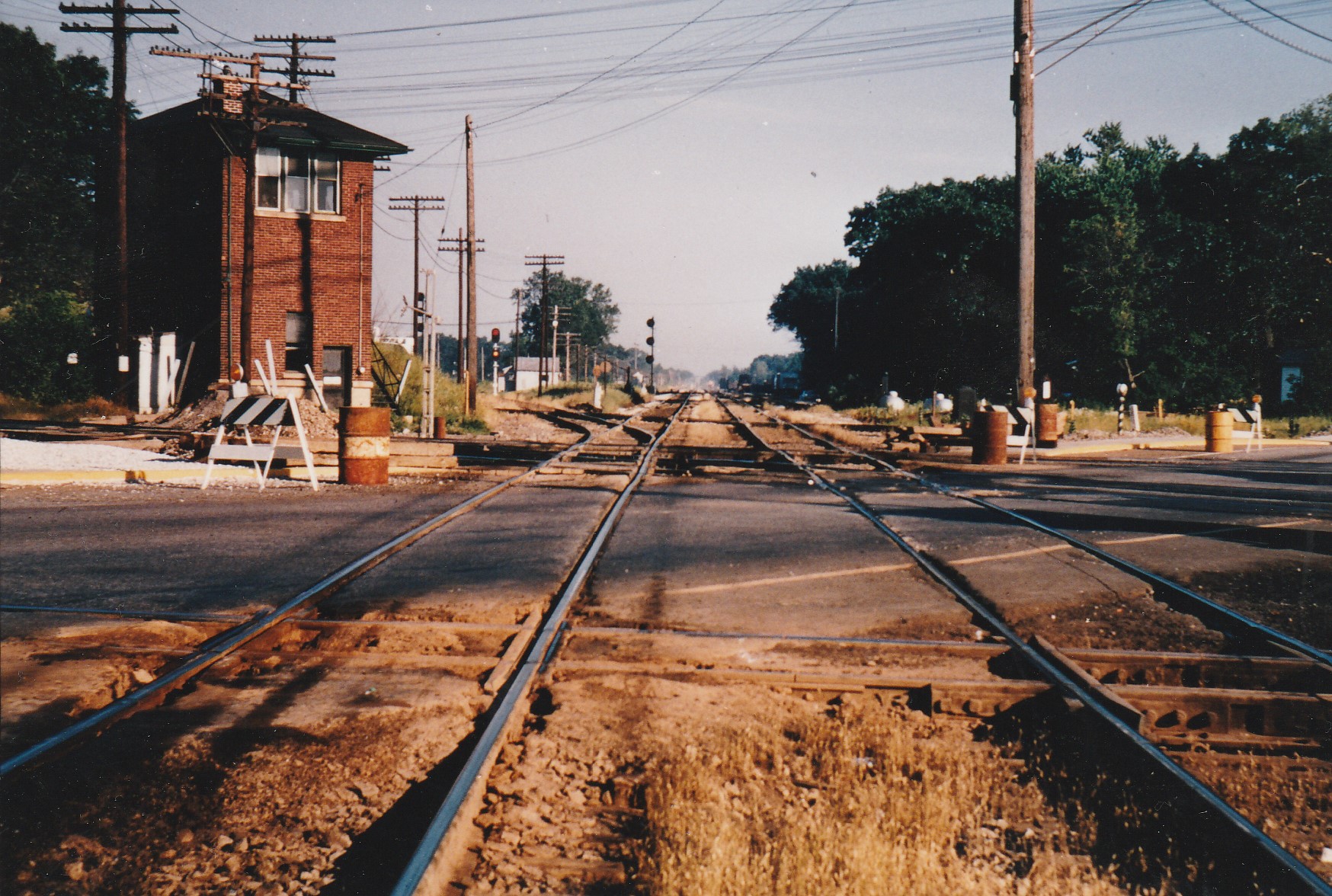
Griffith’s junction had five sets of rail lines interlocking at one place, hence the need for a larger brick building.
An interlocking tower was outfitted with machinery that linked the tower to sets of moveable tracks, called “switch tracks,” and a man that operated it. Through the use of levers linked to these tracks, the Operator, often called the Towerman, could control their position.
By carefully coordinating these switch tracks, the Operator was able to ensure an oncoming train was safely guided onto the right track to avoid a collision.
At one time, there were 5,000 railroad towers, in North America. Today, there are fewer than 50 towers still operating. Most of the rest have been torn down due to advancements in technology.
Our tower also faced demolition 25 years ago, but then Elgin Joliet & Eastern Railway general manager, Mel Turner, asked if we wanted the building. Of course, we said, “YES!”
We’ll continue to unfold more of this story here on our site, culminating in a Celebrate Our Tower Day, at the Griffith Historical Park, August 10th.
So, be sure to stay tuned, to use a well-known phrase of days gone by.
(And click the DONATE button now to help support upkeep of the Tower and rail-cam!!)
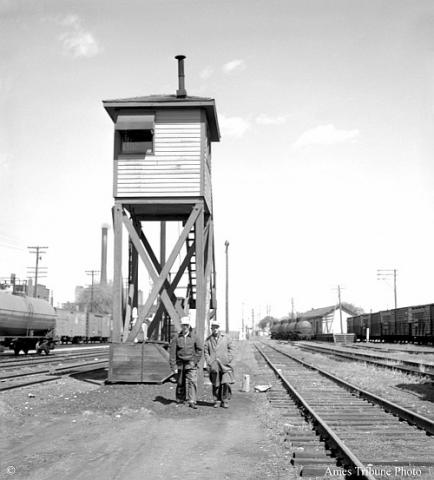
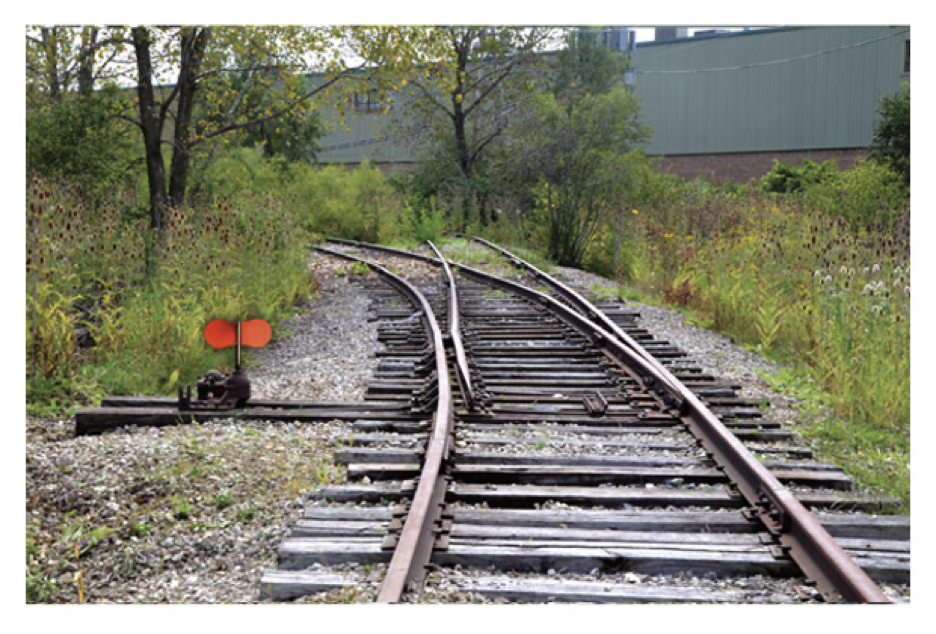
Left: Ames, IA Gate Tower, April 4, 1958 , which looks similar to a manually operated switch tower ; Web source: https://ameshistory.org/tribunearchives/railroad-crossing-watchmen
Right Top: Switch rails; Right bottom:
Griffith’s Interlocking Tower, July 6, 1974, Photo taken by John Strombeck
Web source: https://industrialscenery.blogspot.com/2017/09/griffith-in-ej-and-cngtw-junction-tower.html
 Griffith History Museums