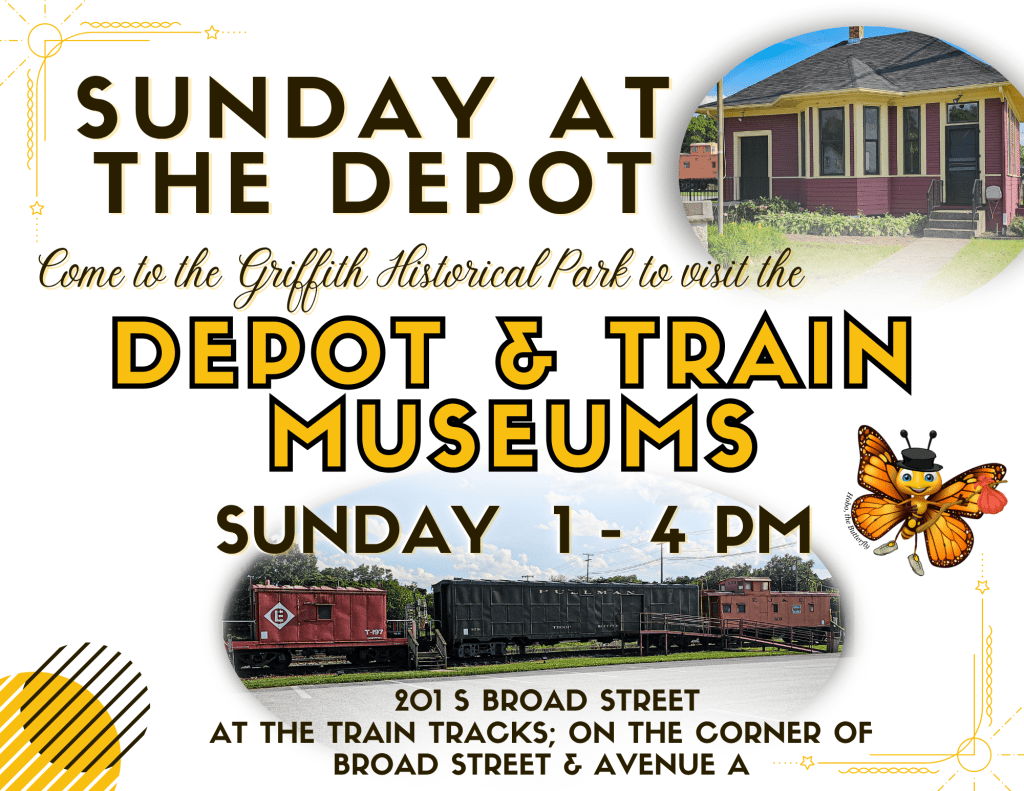
It’s a busy weekend for the Historical Society!! 🚂Friday – LAST Barrel Train at Central Market for the Season! 🚂Saturday – Barrel Train at Safety Day at Central Park! 🏛️Saturday – The TOWN HISTORY Museum at the Franklin Center will be open! 🛤️Sunday – Visit the Depot and Train Museums! Tour guides will be available. Parents of Beiriger 3rd Graders – come see what your kids learned this week!
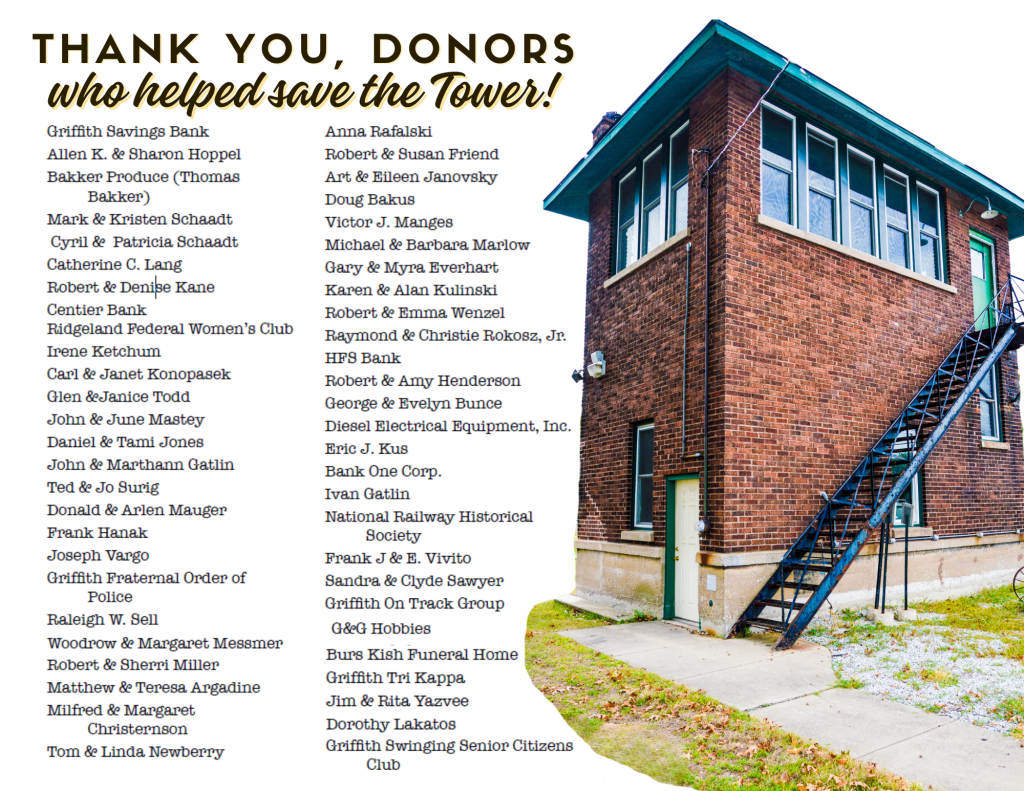
It was 25 years ago, and we are still grateful to everyone who donated time and money to help us preserve the Tower and save it from demolition.
Thanks to the businesses and banks that allowed us to put donation jars on their counters, and thanks to all the Griffith residents who put money in the jars! Thanks to all the Historical Society members, who volunteered every step of the way, and of course, thank you to all the people and businesses who donated money towards this gigantic project!
It was really a town-wide effort, and is a monument to the spirit of Griffith!
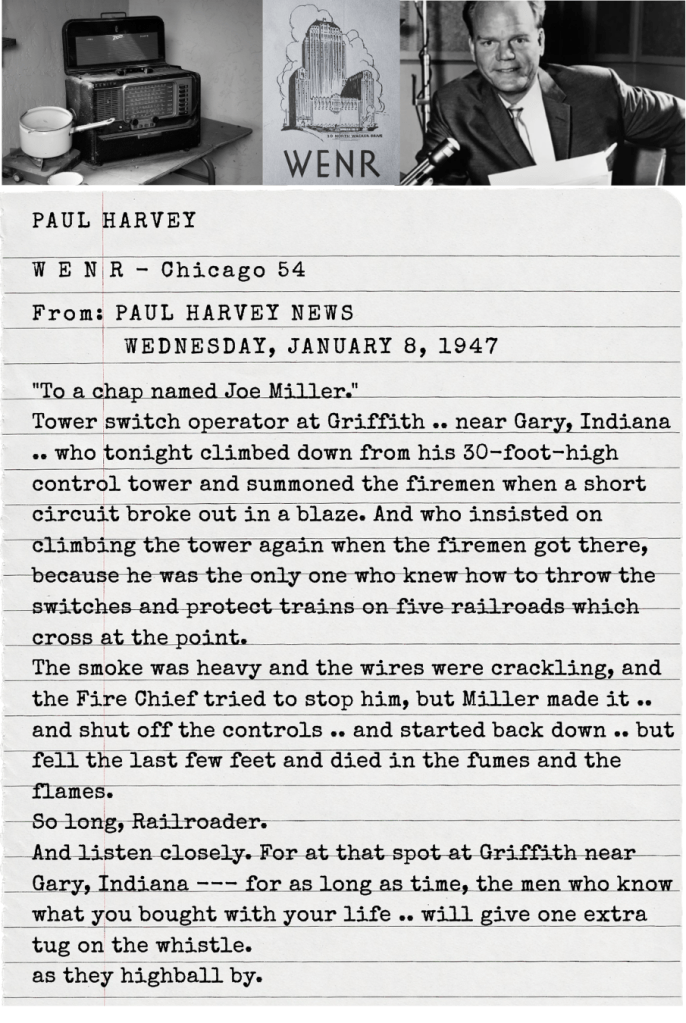
The man who said those words almost every night on the radio was a man named Paul Harvey. When he took notice of Joe Miller, he was the most-listened-to radio broadcaster in America, heard by 25 million people every day.
From his studios in Chicago, Illinois, Harvey would every day diligently sift through news reports available to newspapers and radio broadcasters. He was looking for compelling stories that might have been overlooked by other media outlets.
In early January, 1947, he found such a story, and it happened just 25 miles away in Griffith, Indiana.
Harvey’s programs were carried by 1,200 radio stations, plus an additional 400 stations of American Forces Radio. Famous well into the 1980’s, he had a popular syndicated newspaper column and a TV program.
Here’s the rest of Joe’s story, Paul Harvey’s tribute to Griffith’s own, Joe Miller, was broadcast on January 8, 1947.
A fear that is universal to all of us, but must have run deeper for men like Joe Miller, who worked in Griffith’s 30-ft-tall Elgin Joliet and Eastern Railway interlocking tower.
You can imagine Joe’s terror that evening in early January, 1947, when smoke began pouring from the tower’s automatic switching controls. With more than 20 years a towerman, he immediately tried to put the fire out himself.
When that failed, and with no other way to alert the nearest depot, he ran down the tower stairs, knowing he was losing time with every step.
When the firemen arrived, all volunteers, Joe returned with them to the tower room despite Fire Chief Robert McFarland’s efforts to restrain him.
“I have go up there,” he told the Chief. “I’m the only one who knows how to shut off the controls that will flag oncoming trains to stop.” So, Joe Miller went back into the smoky tower room again and did what he had to do. He again went down that long string of stairs and was taken to the local doctor’s office.
He was coughing hard and often, and the doctor called Highland to use their Pullmotoran. But even that, an early type of ventilator to assist with breathing difficulties, didn’t help.
Sadly, the time spent in the tower room inhaling smoke and chemical fumes from burning burning electrical wires had vanquished Joe’s lungs and heart.
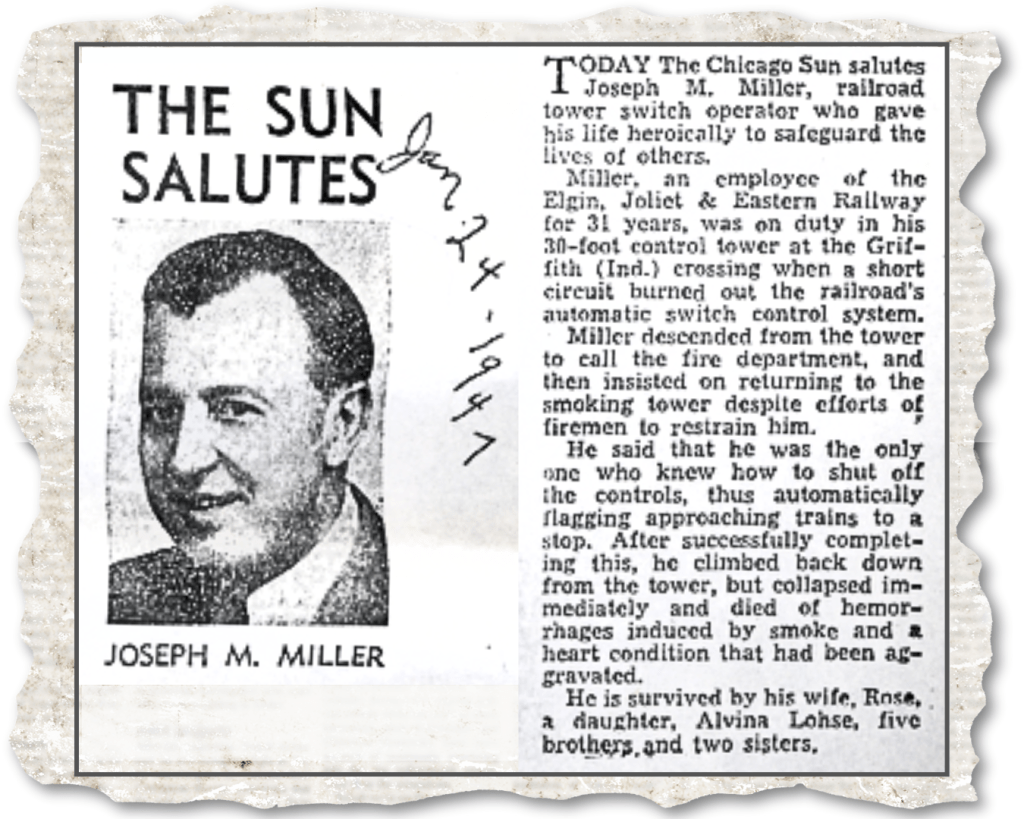
In the tradition of railroad men for generations, Joe Miller had done his duty, and gave his life heroically in doing so. Newspaper articles praised his bravery and dedication to saving lives.
One newspaper ran an editorial suggesting Joe be nominated for a Carnegie Hero Award. Named after philanthropist Andrew Carnegie, it is presented “to individuals in the United States and Canada who risk death or serious physical injury to an extraordinary degree saving or attempting to save the lives of others.”
Joe Miller did not receive that award, but he did receive notice from a man that some might say was equal in fame to Mr. Carnegie.
The upper room of the Griffith Centennial Tower Museum is dedicated to Mr. Miller’s memory as the Joseph Miller Tower Room.


 Griffith History Museums