𝐎𝐧𝐜𝐞 𝐔𝐩𝐨𝐧 𝐚 𝐓𝐨𝐰𝐞𝐫 – 𝐏𝐚𝐫𝐭 𝟐

𝙊𝙪𝙧 𝙎𝙤𝙘𝙞𝙚𝙩𝙮 𝙎𝙖𝙜𝙖 – 𝙎𝙖𝙫𝙞𝙣𝙜 𝙩𝙝𝙚 𝙏𝙤𝙬𝙚𝙧
𝘣𝘺 𝘒𝘢𝘳𝘦𝘯 𝘒𝘶𝘭𝘪𝘯𝘴𝘬𝘪

How does a group of “not the youngest of people” raise thousands upon thousands of dollars in just 7 months?

First of all, we bought a banner that said HELP US SAVE AND MOVE OUR TOWER!

Then we called on the Griffith Fire Department and asked them to put up the banner for us. The idea was everyone would see our message while waiting for trains to pass at our crossing.

This was in the year 2000. The internet and social media were in their infancies. So, how did one get the word out beyond our town?

We called the newspapers, who graciously published stories and photos about our efforts.

The very next day, the president of the Griffith Saving Bank called and gave us $1,000.

We were on our way!

Next, we wrote letters to any and all local, state and federal foundations, including the Lily Endowment.

Donald Trump had a casino boat in Griffith, so we contacted him. He gave us $100.

In the end, though, most donations came right from our town.

The schools stepped up. Beiriger held a Penny War that earned over $500.

The Griffith Junior/Senior High School had a walk-a-thon from their schools to our Historical Park and back. They raised over $500 for us.

We even had the honor to be written up in a newspaper column by Bo Kane, who grew up in Griffith and had a grandmother who lived right by.

Town organizations sent donations, and stores and businesses contributed to our cause.

Many of them put out Save The Tower mugs for us, so people we didn’t even know could donate to us.

Towns people who once worked for railroads or had a railroading heritage were very generous.

And friends from out of town, the Blackhawk Railway Historical Society, procured a $5,000 National Railway Heritage Grant for us.

The support we got from everyone was overwhelming and we will be forever grateful to them.

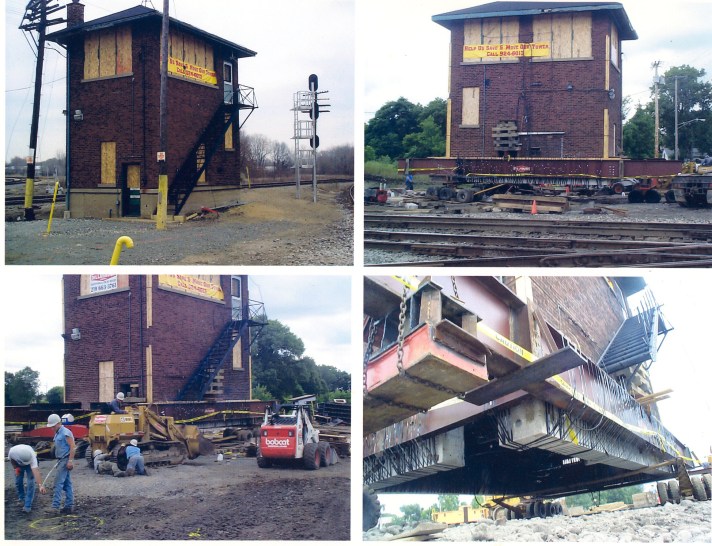
We were especially so on July 20th, 2000, when Dillabaugh, Inc. did what seemed impossible and moved a three story bright tower.

Out onto Broad Street at 9 o’clock, across the tracks and onto our property by lunchtime, standing above the new foundation at quitting time.

And the box of soap that was on a shelf in the upper room never moved. It was still in place when the boards were later removed and the building was opened up!

A historic job done by everybody involved, well done and ahead of schedule.
WHAT IS AN INTERLOCKING TOWER, ANYWAY?

There is a truth beyond doubting that railroad companies really don’t like when two trains collide. Especially in bygone times when they were just getting started and money was tight.

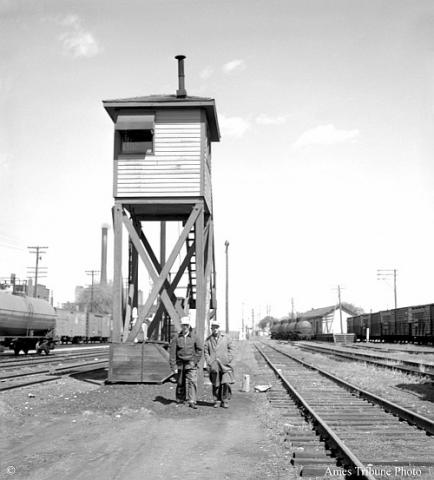
So, wherever two sets of rail lines crossed each other, known as an interlocking, a small cabin on stilts was built to control train movement. It was up high to provide a clear view of the tracks. An employee would manually activate the grade crossing signals and gates before automatic detection was available or installed.  (Check out the photos below!)

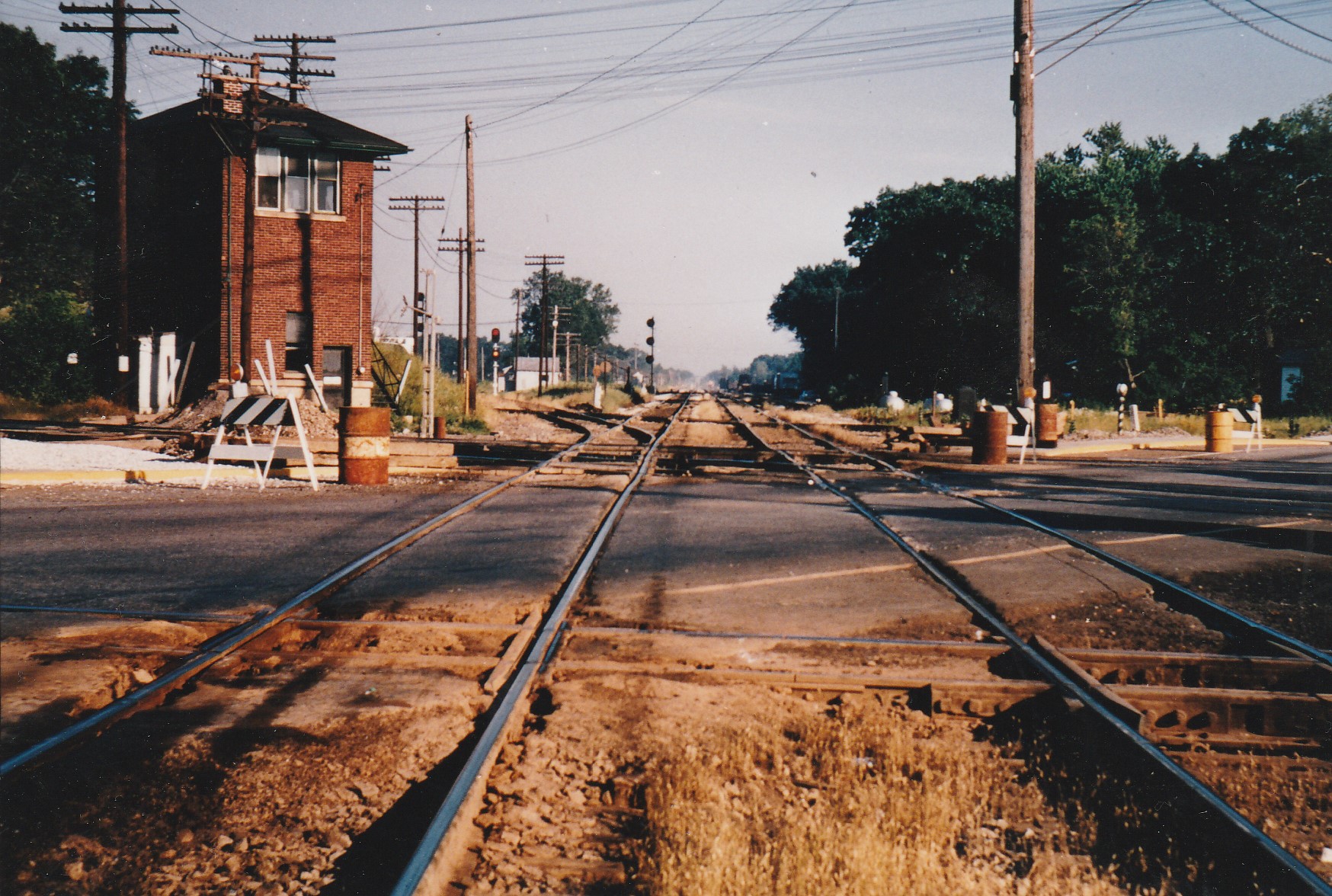
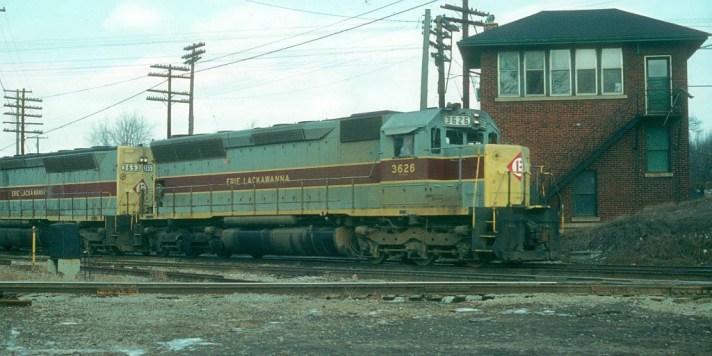
Griffith’s junction had five sets of rail lines interlocking at one place, hence the need for a larger brick building.

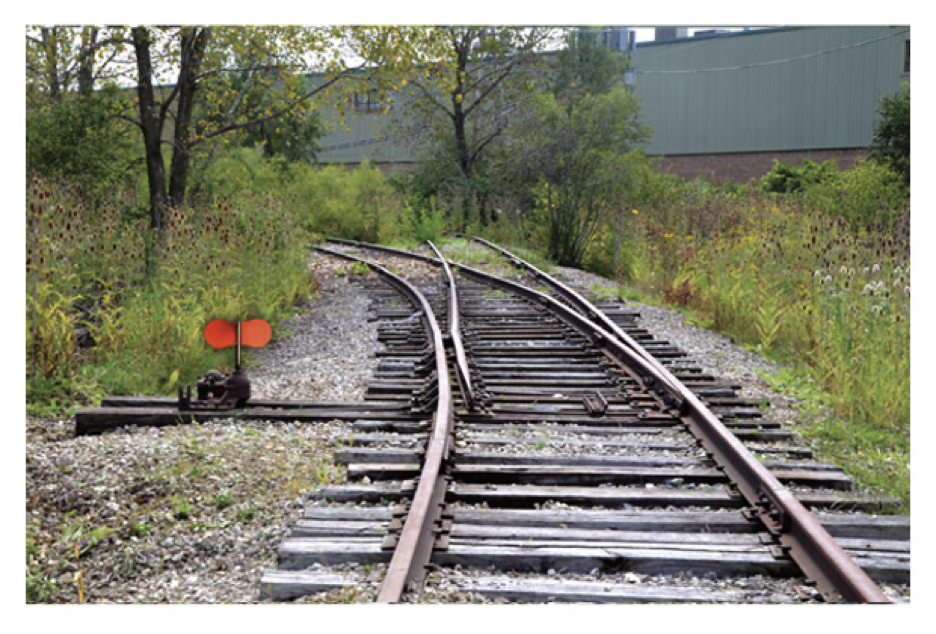
An interlocking tower was outfitted with machinery that linked the tower to sets of moveable tracks, called “switch tracks,” and a man that operated it. Through the use of levers linked to these tracks, the Operator, often called the Towerman, could control their position.

By carefully coordinating these switch tracks, the Operator was able to ensure an oncoming train was safely guided onto the right track to avoid a collision.

At one time, there were 5,000 railroad towers, in North America. Today, there are fewer than 50 towers still operating. Most of the rest have been torn down due to advancements in technology.

Our tower also faced demolition 25 years ago, but then Elgin Joliet & Eastern Railway general manager, Mel Turner, asked if we wanted the building. Of course, we said, “YES!”

We’ll continue to unfold more of this story here on our site, culminating in a Celebrate Our Tower Day, at the Griffith Historical Park, August 10th.  

So, be sure to stay tuned, to use a well-known phrase of days gone by.

(And click the DONATE button now to help support upkeep of the Tower and rail-cam!!)

Left: Ames, IA Gate Tower, April 4, 1958 , which looks similar to a manually operated switch tower ; Web source: https://ameshistory.org/tribunearchives/railroad-crossing-watchmen
Right Top: Switch rails; Right bottom:
Griffith’s Interlocking Tower,
July 6, 1974, Photo taken by John Strombeck
Web source: https://industrialscenery.blogspot.com/2017/09/griffith-in-ej-and-cngtw-junction-tower.html

𝐎𝐧𝐜𝐞 𝐔𝐩𝐨𝐧 𝐚 𝐓𝐨𝐰𝐞𝐫 – 𝐏𝐚𝐫𝐭 𝟏

𝙊𝙪𝙧 𝙎𝙤𝙘𝙞𝙚𝙩𝙮 𝙎𝙖𝙜𝙖 – 𝙎𝙖𝙫𝙞𝙣𝙜 𝙩𝙝𝙚 𝙏𝙤𝙬𝙚𝙧
𝘣𝘺 𝘒𝘢𝘳𝘦𝘯 𝘒𝘶𝘭𝘪𝘯𝘴𝘬𝘪

The tale of the Tower, and indeed a great deal of Griffith Historical Society’s history, reads like a storybook, hence the title.

Do you know what 𝙨𝙚𝙧𝙚𝙣𝙙𝙞𝙥𝙞𝙩𝙮 is? Beyond an amazing Griffith ice cream parlor? I use the world a lot when talking about how we developed and grew.

Serendipity in the dictionary is described as: 𝗮 𝗰𝗵𝗮𝗻𝗰𝗲 𝗼𝗰𝗰𝘂𝗿𝗿𝗲𝗻𝗰𝗲 𝘁𝗵𝗮𝘁 𝗱𝗲𝘃𝗲𝗹𝗼𝗽𝘀 𝗶𝗻 𝗮 𝗵𝗮𝗽𝗽𝘆 𝗼𝗿 𝗯𝗲𝗻𝗲𝗳𝗶𝗰𝗶𝗮𝗹 𝘄𝗮𝘆.

Serendipity in real life:

  • The chance meeting of four people who went on to spearhead the saving of the last Griffith’s depot from demolition. (See our first “Society Saga” in our spring newsletter or on our website for that story.)
  • The time the land we hoped to expand on, that was $20,000 when we first asked to purchase it, dropping to $8,000 when we absolutely, positively, 100% had to purchase it.
  • And we must mention how I was serendipitously connected to the General Superintendent of the Elgin Joliet & Eastern railroad when I called asking for key chains and paper engineer hat to give away to kids.

That man, Mel Turner, ended up giving us the Tower some five years later.

You know how you immediately click with someone? That was me and Mr T (though I never called him that to his face).

We talked for nearly an hour: about our getting the land and our future plans for it; about his railroad’s plans for tearing down our Tower, and could we have the equipment in the upper room, which was a yes.

From time to time, I would write him, filling him in on everything we were doing, and asking about the Tower. I found those old letters recently, and it was as though I was writing to a friend. I can only help wondering what he thought of my rambles.
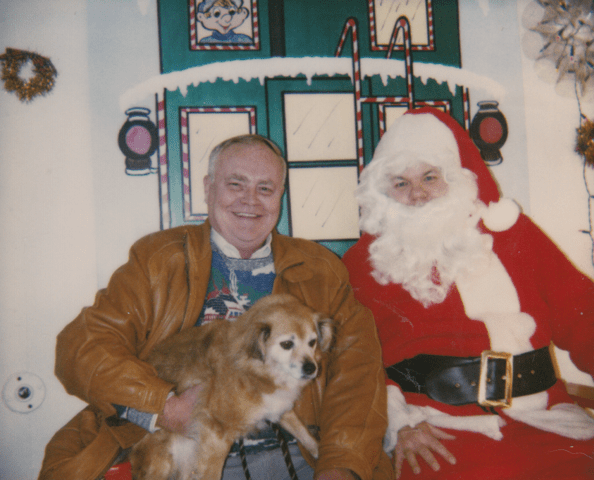
In mid-December, 1999, Mr. Turner came out to the Park during our Santa event, with his beloved dog, Buddy. Our Tower, he told us, was being closed down at the end of the year. And, he said, he was giving us the Tower!

The whole building!! And $30,000, to help with the move!!!

And we had until July 30th to get the Tower off their land.

Tale to be continued…

Mr. Turner and Santa in the Caboose

Mr. Turner and Santa in the Caboose

Butterfly Day at the Depot!

🦋Join us to celebrate National Start Seeing Monarchs Day!
Visit Griffith’s very own butterfly garden, aptly named the Griffith Junction Butterfly Stop.
🦋 It’s the first anniversary of the garden, conceived and planted by Griffith Tri Kappa member Jeanette Bobos, and supported by the organization.
🦋May 4th is one day after National Start Seeing Monarchs Day, when America celebrates those beautiful, endangered orange and yellow creatures.

It will be a fun and interesting Sunday afternoon at the Griffith Historical Park, where:
🚂The Depot & Train Museums, and the Tower will be open to tour
🚂Our barrel train, the Hess Express, will be running
🦋Jeanette Bobos, the retired Master Gardner who planted our garden, will be on on hand to share her knowledge. We’ll have info on Monarchs and how they’ve become endangered.
🦋Kim Moor, from The Wild Ones, will be with us sharing information about adding native plants to your garden.
🌻Want plants to help butterflies, especially Monarchs? Through the courtesy of Scheeringa Farms, we’ll have a small selection of milkweed plants; black-eyed Susans, Griffith Centennial’s flower in 2004; plus some Heirloom Plants, as well.
🍪Girl Scout Troop 15620 will be selling cookies, lemonade, and butterfly clips.
🌭The Cub Scout Pack 622 and Boy Scout Troop 623 will be on hand with hotdogs, chips and pop.